Epic Launches Agent Factory as AI Reaches 85% of Its Hospital Network
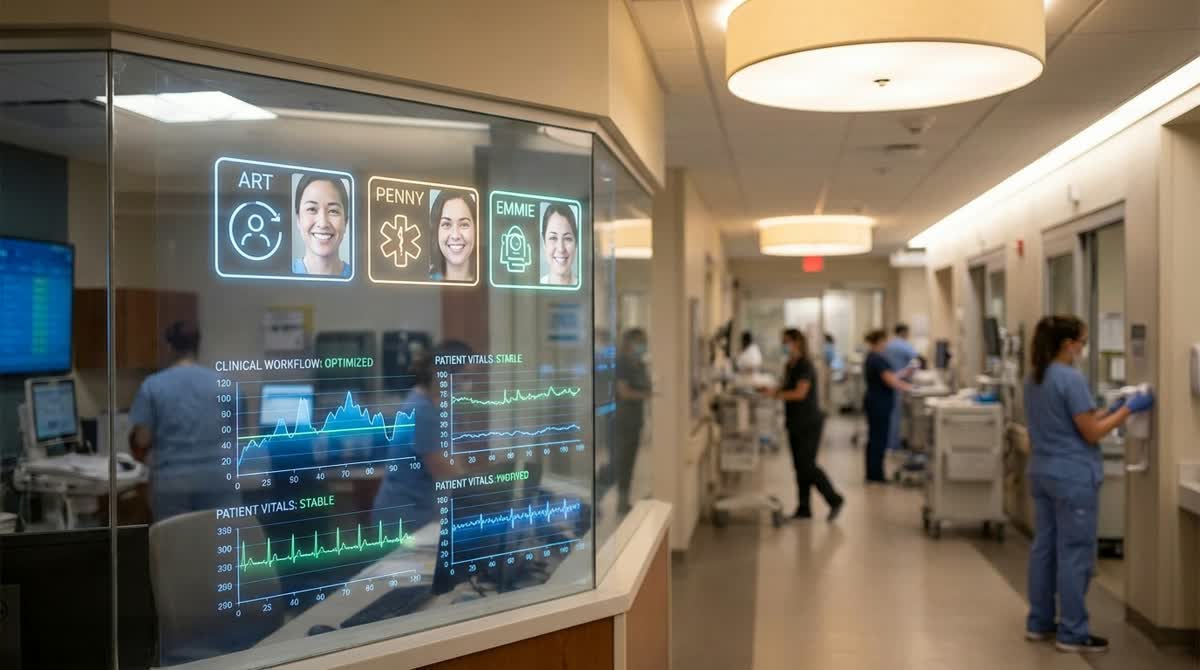
At HIMSS 2026 in Las Vegas, Epic Systems announced that more than 85% of its hospital customers are now actively running its AI tools — a milestone that effectively means AI agents are live across the majority of the U.S. healthcare system.
Three Agents, Real Numbers
Epic's AI suite runs on three named agents. Art handles clinical documentation; its ambient listening tool has expanded into bedside nursing workflows at Houston Methodist and is rolling out for home care in April. At The Christ Hospital, Art is flagging incidental radiology findings, pushing early lung cancer detection to 69% — compared to the 46% national average.
Penny automates the revenue cycle. Summit Health cut prior authorization submission time by 42%, with 92% of AI-generated responses accepted without edits. Across Epic's high-usage deployments, coding-related claim denials have dropped by over 20%.
Emmie faces patients directly. At Rush University Medical Center, it reduced billing-related customer service messages by 58%. Sutter Health became the first system to go live with Ask Emmie — a conversational AI embedded inside MyChart that answers health questions using a patient's own medical record.
What's New
Epic announced Agent Factory, a no-code visual builder letting health systems create and deploy custom AI agents across clinical and administrative workflows. Alongside it, Epic previewed Curiosity — a family of medical foundation models trained on anonymized patient records to predict disease progression and medication outcomes.
Oracle, Amazon, Google, and Microsoft also announced AI agent tools at HIMSS, but Epic's scale — and its documented operational results — made it the dominant story of the conference.