MoonPay Agents Now Let AI Trade Crypto While Your Keys Stay on Hardware
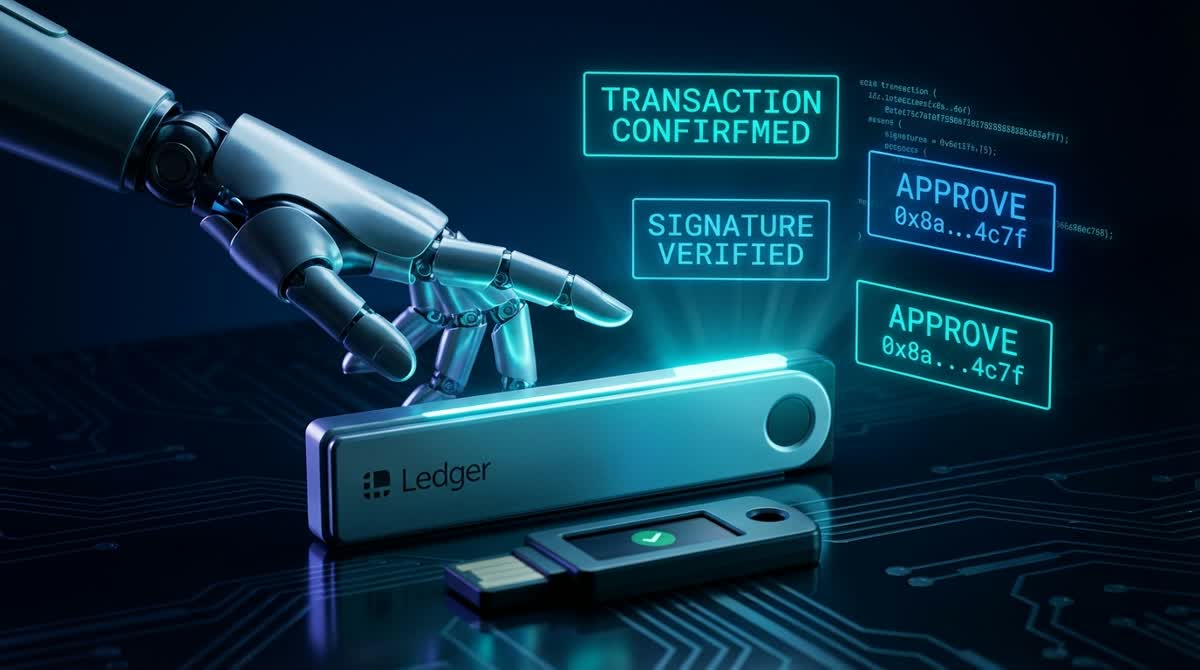
MoonPay shipped a significant update to its AI agent product this week: native Ledger hardware wallet signing for MoonPay Agents, making it the first CLI wallet where an AI agent can execute crypto transactions while private keys remain locked on a physical device.
The Problem It Solves
Autonomous crypto agents — tools that rebalance portfolios, bridge assets, and execute trades without constant human input — have a fundamental security problem: they need wallet access to act, which traditionally means exposing private keys. That risk has slowed adoption even as agent-driven DeFi automation gains traction.
MoonPay's integration flips the model. The agent handles the logic; the Ledger handles the keys. When the agent wants to execute a swap or bridge, it generates the transaction and pauses — the user approves it on-device before anything moves on-chain.
How It Works
Connect any supported Ledger device (Nano S Plus, Nano X, Gen5, Stax, or Flex) via USB to the MoonPay CLI. The agent automatically detects wallets across all supported chains — Base, Ethereum, Solana, Arbitrum, Polygon, Optimism, BNB Chain, and Avalanche — and handles chain-switching automatically without manual steps.
All swaps, bridges, and transfers route through the Ledger signer for on-device approval. The agent executes; the human signs.
Industry Context
"Autonomous agents will manage trillions in digital assets," said Ivan Soto-Wright, MoonPay CEO. "But autonomy without security is reckless." Ledger CXO Ian Rogers noted that a new wave of CLI and agent-centric wallets is emerging, and hardware security will become a baseline expectation.
The update is live now in MoonPay CLI v0.12.3.