Amy Webb Declares Death of the Tech Trend Report at SXSW 2026
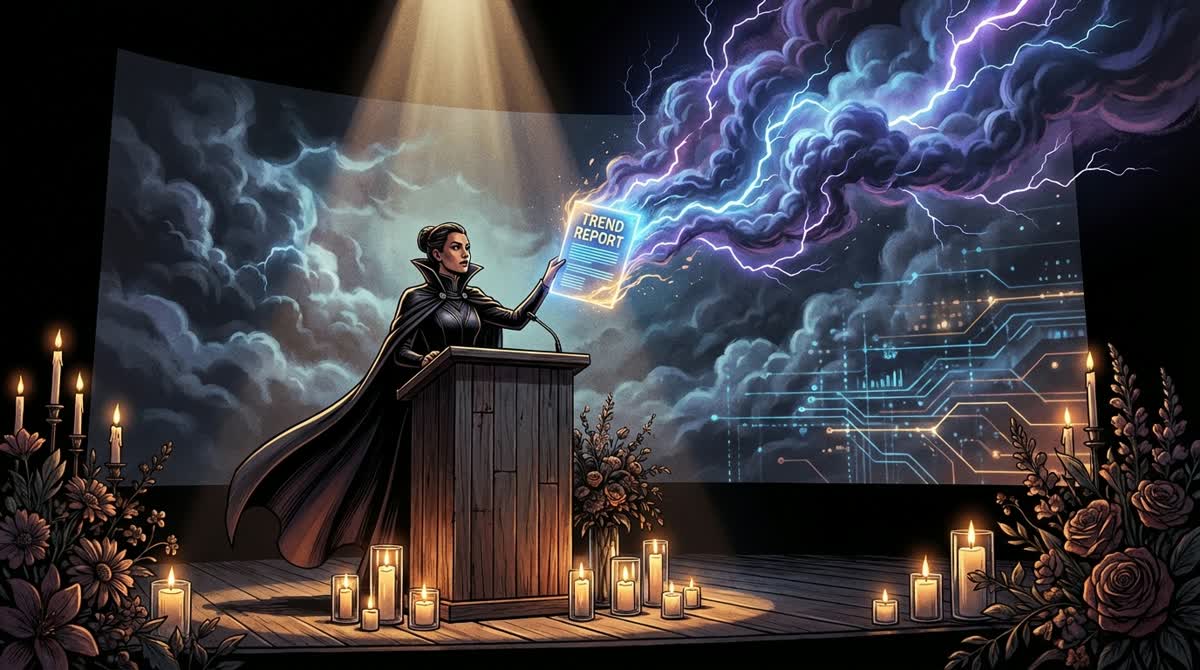
At SXSW 2026 in Austin, futurist Amy Webb did something no one in the audience expected: she walked onto a candlelit stage dressed in black and announced the death of her own most famous creation.
For 19 years — 15 of them presented at SXSW — Webb's Emerging Tech Trend Report from the Future Today Strategy Group shaped how executives and technologists thought about the year ahead. On Saturday, she retired it.
"Sometimes you have to burn what you built and open the way for what the future demands," Webb told the crowd of around 1,500 people at the Hilton Grand Ballroom. Her argument: annual trend reports are too static for a world that changes in real time.
From Trends to Convergences
The replacement is the Convergence Outlook, a new annual framework that shifts focus from individual technology shifts to moments when multiple forces collide simultaneously. Webb defines a convergence as a change that impacts multiple sectors at once, creates new realities immediately, redistributes power, and is extremely difficult to reverse.
"A convergence tells you what will become inevitable before it seems inevitable," she said. "That means the window to act is earlier — but the cost of missing it is much larger."
The Convergence Outlook maps ten such shifts for 2026. Webb previewed two in detail during the session:
- Super-humans: Motorized exosuits, AI sleep optimization, and real-time AR translation creating people who are "objectively better" than unaugmented counterparts.
- Unlimited labor: AI systems that autonomously write and rewrite code at scale, enabling production without people — upending labor economics in place since the Industrial Revolution.
The announcement drew wide coverage and marks a visible shift in how one of tech's most-watched futurists frames what comes next. The full Convergence Outlook with all ten shifts will be published through Future Today Strategy Group.