SEC and CFTC Sign Historic MOU to End Crypto Regulatory Turf War
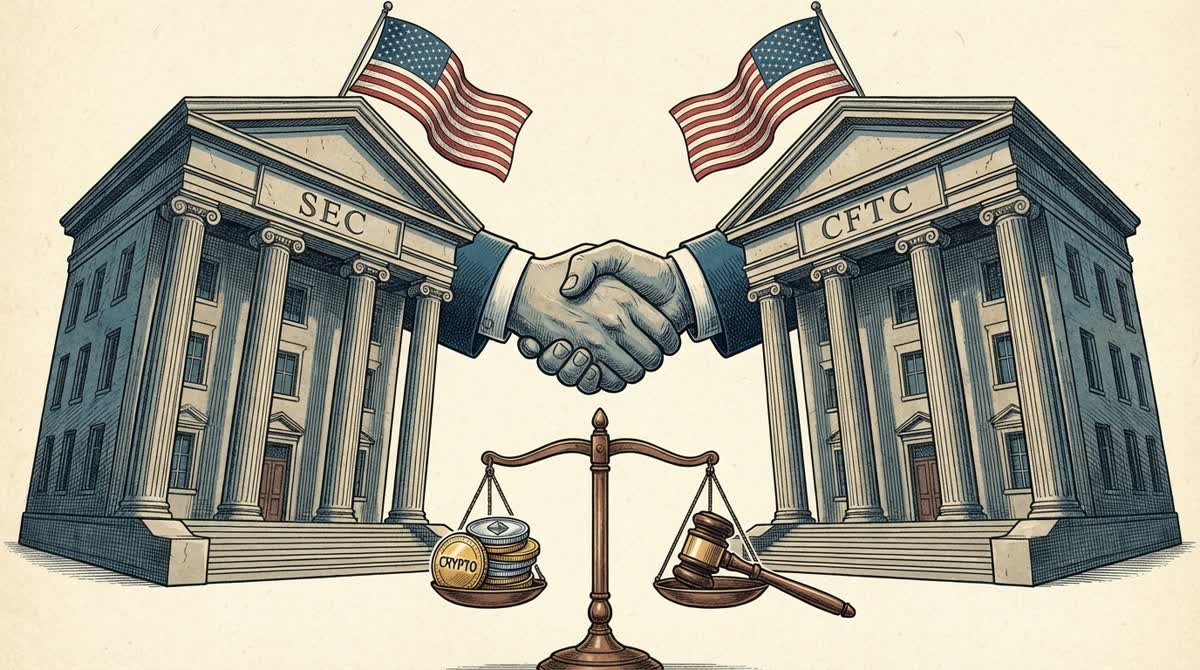
The U.S. Securities and Exchange Commission and the Commodity Futures Trading Commission signed a memorandum of understanding on March 11, formally agreeing to coordinate their oversight of the digital asset sector — a shift that ends years of regulatory conflict that repeatedly entangled crypto companies in contradictory requirements from two different agencies.
What the MOU Does
The agreement sets up regular joint meetings between SEC and CFTC staff, shared data pipelines, and coordinated enforcement decisions. Crucially, it ends the era of parallel enforcement actions — when both agencies pursued similar accusations against the same firm independently.
Going forward, the agencies will "confer on potential charges and relief, sequencing of filings, litigation strategy and public communications" when their enforcement interests overlap.
The deal also targets a long-standing problem: inconsistent definitions of what counts as a security versus a commodity. The two agencies will work toward joint interpretations and rulemakings to clarify how specific crypto assets are categorized.
Why It Matters
For years, the SEC and CFTC operated under fundamentally different views of the same assets. A firm could receive contradictory guidance from both regulators simultaneously, with no clear mechanism to resolve the conflict.
"For decades, regulatory turf wars, duplicative agency registrations, and different sets of regulations between the SEC and CFTC have stifled innovation and pushed market participants to other jurisdictions," SEC Chair Paul Atkins said in a statement.
Both chairmen — Atkins at the SEC and Mike Selig at the CFTC — were appointed by President Trump. The MOU is the clearest signal yet that the current administration is moving toward a unified, industry-friendly regulatory framework for crypto.
Whether formal rulemaking follows the memo remains the open question.