Cursor Unveils Composer 2: A Coding Agent That Summarizes Itself
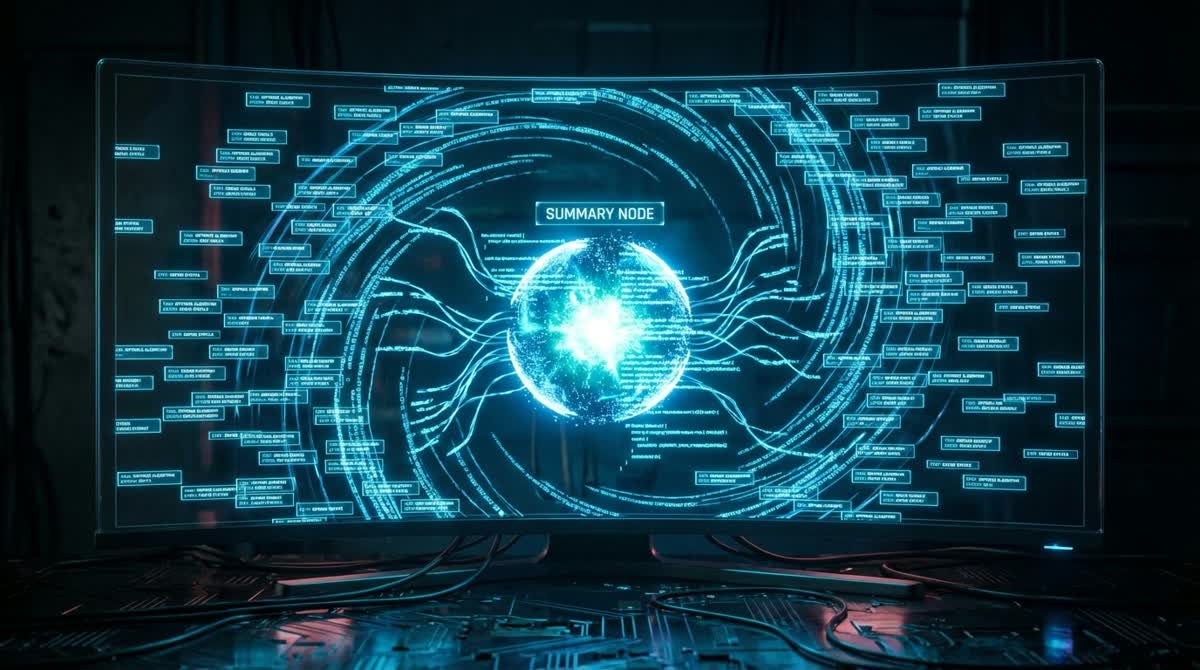
Cursor is launching Composer 2, a new AI model purpose-built for long-horizon coding tasks. Unlike general-purpose models adapted for code, Composer 2 was trained entirely within Cursor's own agent harness using reinforcement learning — and its core trick is teaching itself to forget smartly.
The Problem With Long Coding Sessions
Most AI coding agents break down on complex, multi-step tasks because their context window fills up. When that happens, harnesses typically compress context using a lengthy hand-crafted prompt — a process that often loses critical details and costs thousands of tokens per compaction event.
Self-Summarization as a Trained Skill
Composer 2 sidesteps this with a method Cursor calls self-summarization. Instead of relying on a separate prompt to summarize context, Composer is rewarded during RL training for generating compact, useful summaries of its own in-progress work.
When Composer approaches its token limit, it pauses, summarizes what it knows, and continues — with summaries averaging just 1,000 tokens versus the 5,000+ tokens required by prompt-based approaches. Cursor reports this method reduces compaction errors by 50%, while using one-fifth the tokens.
Benchmark Results
Cursor tested Composer 2 on CursorBench and Terminal-Bench 2.0. In one documented case, the model successfully compiled DOOM for a MIPS architecture — a task that stumped several powerful frontier models — working for 170 turns while self-summarizing over 100,000 tokens of context down to manageable chunks along the way.
Competing Directly With Frontier Labs
Bloomberg reports Cursor is positioning Composer 2 as a direct competitor to coding-capable models from Anthropic and OpenAI. By training a model specifically for agentic coding workflows — rather than adapting general-purpose models — Cursor is betting that specialization beats scale for this category of task.