Samsung to Invest $73 Billion in AI Chips in 2026, Targeting HBM Lead
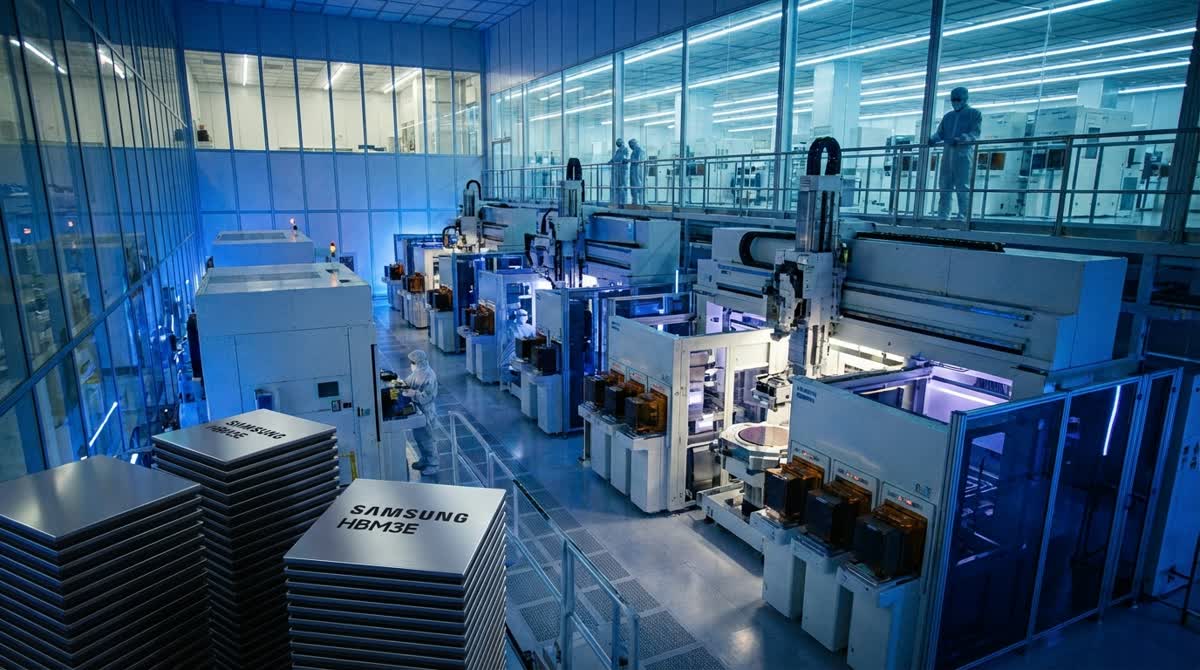
Samsung Electronics announced plans to invest over $73 billion (110 trillion won) in 2026 — its largest annual chip spending on record. The figure marks a 22% increase from 2025's 90.4 trillion won outlay and, according to a regulatory filing released Thursday, will be split between capital investments and R&D.
HBM Takes Center Stage
The bulk of Samsung's ambitions sit in high-bandwidth memory. The company is currently mass-producing HBM3E — the memory stacked inside today's leading AI accelerators — while simultaneously preparing HBM4, its next-generation product expected to deliver higher bandwidth and improved power efficiency.
To lock in demand early, Samsung has expanded its partnership with AMD to supply HBM4 for AMD's Instinct MI455X GPUs and DDR5 memory for its sixth-generation EPYC processors. The company is also under contract to manufacture AI chips for Tesla's autonomous driving and robotics programs.
The Competitive Gap
Samsung is playing catch-up. SK Hynix currently holds the dominant share of HBM supply for Nvidia's AI processors, and TSMC remains the clear leader in advanced-node foundry work. Samsung's 2026 spending plan — which surpasses TSMC's annual capex — signals an aggressive push to close those gaps.
The company is advancing its foundry division with 2nm Gate-All-Around (GAA) process technology, targeting the higher performance and lower power consumption required for next-generation AI workloads.
Agentic AI as Demand Driver
Co-CEO Jun Young-hyun cited demand from agentic AI as a key driver, noting that inference-heavy agent workloads are pulling significantly more memory bandwidth than earlier generative AI applications. Industry analysts project that memory shortages tied to AI chip demand could persist for up to five years.
Samsung reported annual revenue of approximately $230 billion in 2025, with its semiconductor division accounting for a growing share of profit as the global AI hardware buildout accelerates.