WhatsApp Adds AI Writing Tools That Promise Your Chats Stay Private
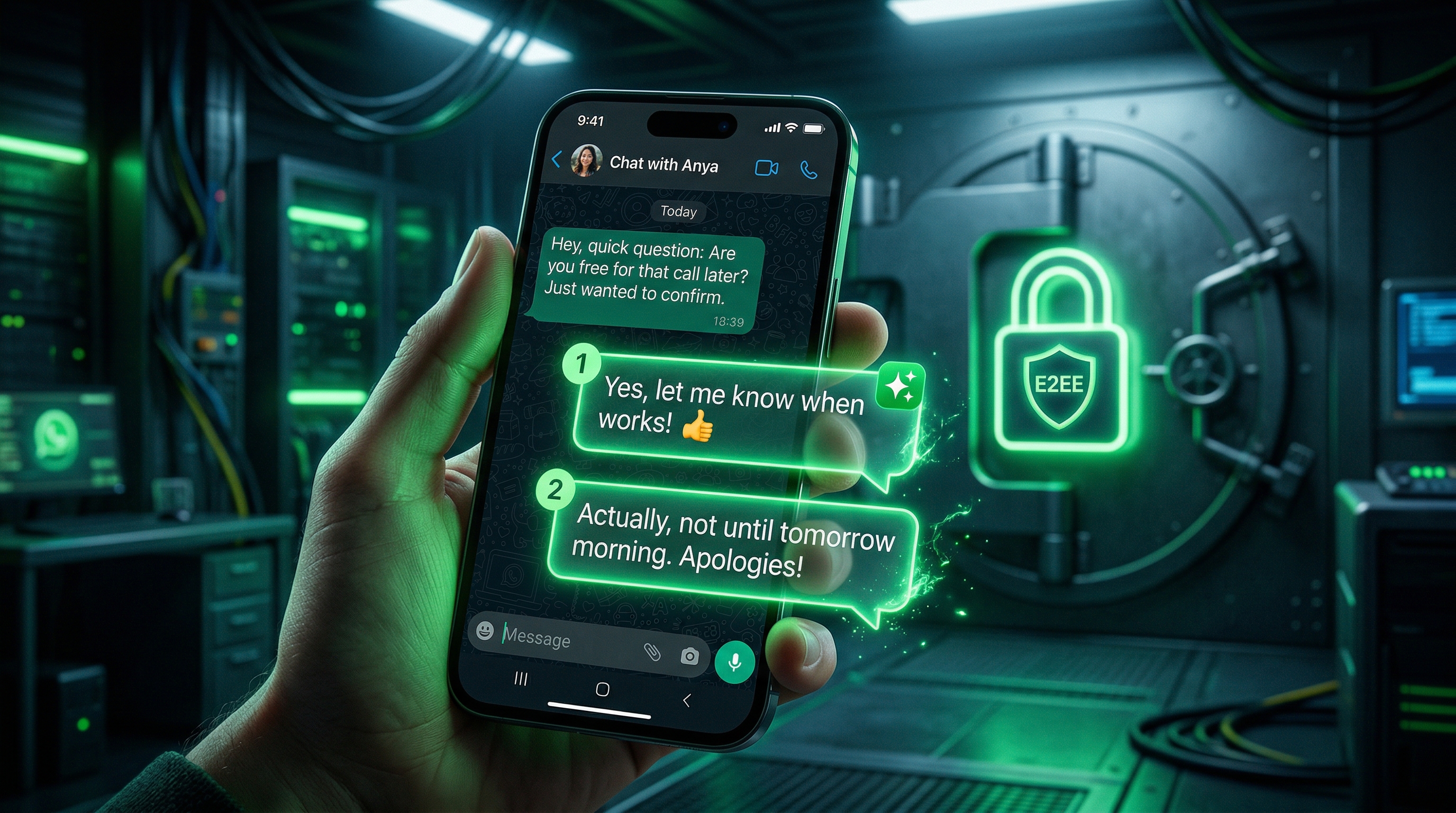
WhatsApp is rolling out AI writing features for its 2 billion users — and the company is leaning hard on a privacy guarantee that sets it apart from other AI assistants: Private Processing.
What's New
WhatsApp announced on Thursday a set of AI tools that can draft suggested replies to conversations and help users compose or edit messages. The features activate on demand and are powered by Meta's AI models.
The key claim: the system runs inside a confidential computing enclave so that message content never reaches Meta's servers in a readable form. WhatsApp says it uses Private Processing infrastructure — the same approach it has described in earlier engineering blog posts — meaning the AI inference happens without exposing message text to Meta or any third party.
Why It Matters
End-to-end encryption has been WhatsApp's core differentiator for years. Adding AI features without breaking that promise is technically difficult — most AI assistants require sending data to a cloud model. Meta's approach routes the AI computation through a hardware-attested, memory-isolated environment instead.
The broader feature round-up also includes AI image editing directly within chats, improved cross-platform chat transfer from iOS, and support for two WhatsApp accounts on one iPhone.
Privacy advocates will likely scrutinize the Private Processing claims closely. Meta has not yet published a full audit or independent verification of the system, and the design relies on trusting hardware attestation — a model that is robust but not impossible to subvert.
The features are beginning to roll out to users globally.