AI in Music Production: The Don't Ask, Don't Tell Era
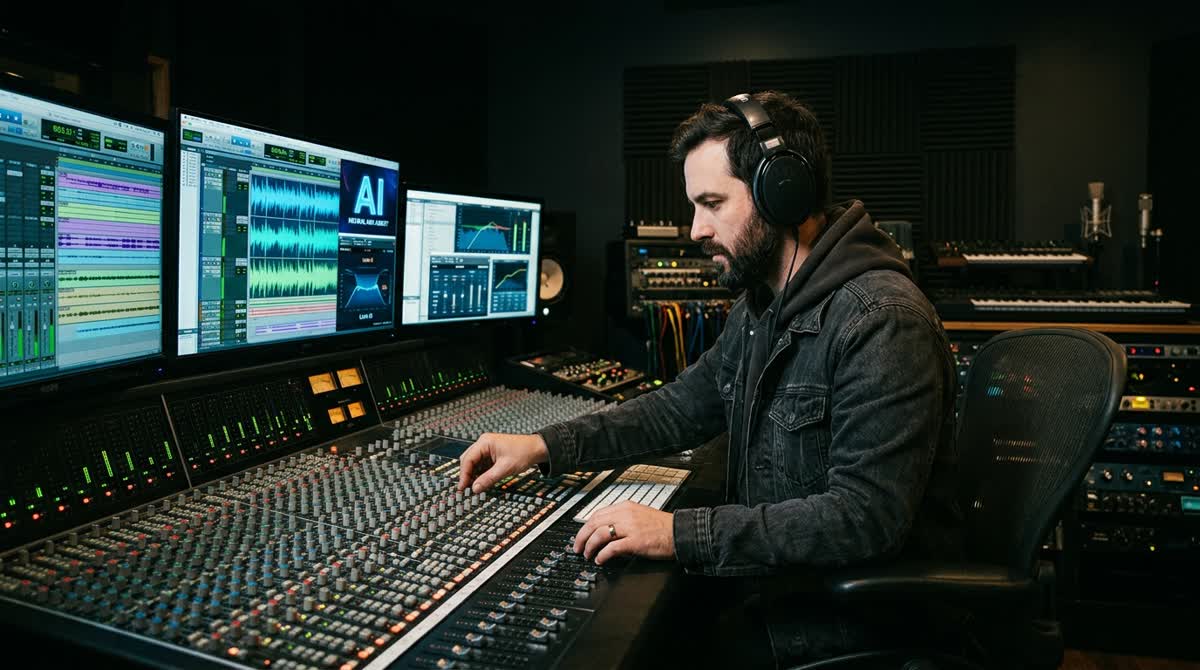
A new Rolling Stone investigation paints a picture of an industry in quiet transformation: AI tools are now standard equipment in professional music production, but an unwritten rule has emerged — nobody talks about it.
"People don't really admit to what extent they're using it," songwriter Michelle Lewis told Rolling Stone. "Don't ask, don't tell." Suno CEO Mikey Shulman put it more bluntly, calling AI music tools "the Ozempic of the music industry — everybody is on it and nobody wants to talk about it."
A Sonarworks survey of more than 1,100 producers, engineers, and songwriters backs that up: 7 in 10 respondents said they use AI tools at least occasionally, with 1 in 5 as regular users. Most are using AI for narrow, time-saving tasks — stem separation, audio restoration, and automated mastering.
But the adoption runs deeper in some genres. Jay-Z's longtime engineer Young Guru told Rolling Stone that AI-generated samples have become standard in hip-hop production. Guru estimates that more than half of sample-based hip-hop is now made with AI-generated material, with producers prompting for specific sonic signatures rather than licensing original recordings or hiring musicians.
The use extends to vocals, too. Artists and producers are quietly using AI to fix stray words, layer background vocals, and reinterpret arrangements — all without disclosure to labels or listeners.
Producer David Baron called AI stem separation "phenomenal," noting that isolating a vocal now yields studio-quality results that were impossible just two or three years ago. Lauren Christy of the Matrix summarized the shift: "The train has left the station."
What's left uncertain is how the industry will reckon with it. Detection software doesn't yet exist at scale, and the honor system is holding — for now.