Bitcoin Miners Are Becoming AI Companies — and Selling BTC to Pay for It
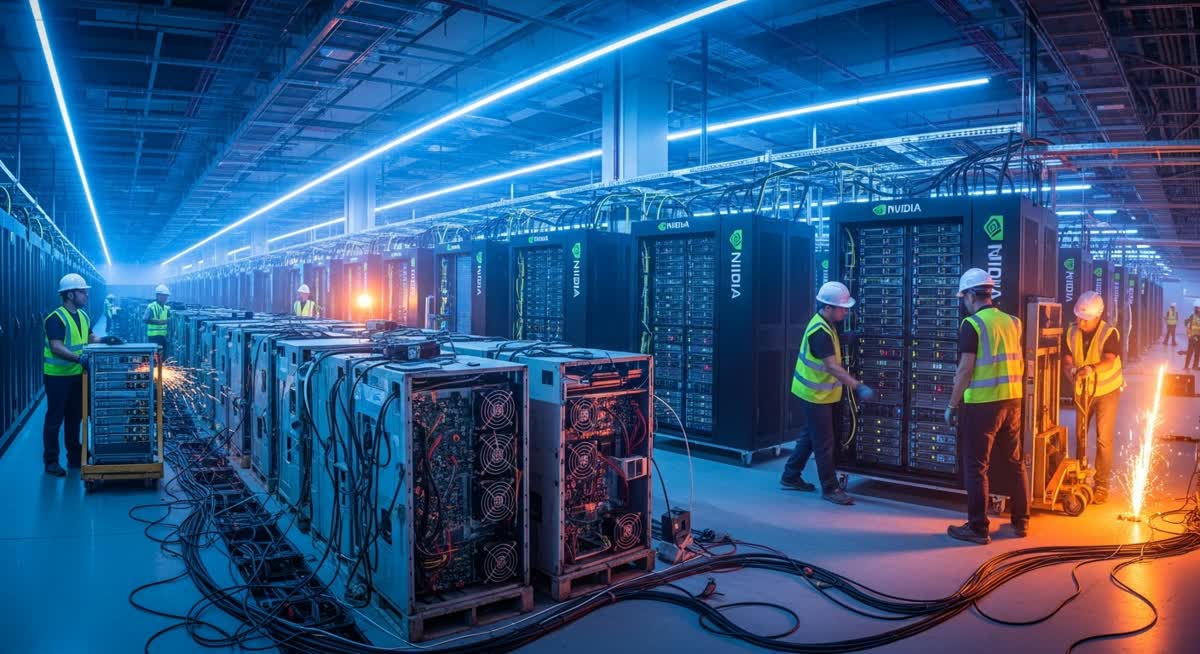
The economics of Bitcoin mining have become unsustainable. According to CoinShares' Q1 2026 mining report, publicly listed miners spent a weighted average of $79,995 to produce a single bitcoin in Q4 2025 — while BTC has been trading in the $68,000–$70,000 range. That's a loss of roughly $10,000 per coin mined.
The industry's response has been a wholesale pivot to artificial intelligence infrastructure. Over $70 billion in cumulative AI and high-performance computing contracts have now been announced across the public mining sector. CoreWeave's expanded deal with Core Scientific is worth $10.2 billion over 12 years. TeraWulf has $12.8 billion in contracted HPC revenue. Hut 8 signed a $7 billion, 15-year AI infrastructure lease. By end of 2026, listed miners could derive up to 70% of revenues from AI, up from roughly 30% today.
To fund these buildouts, miners are selling bitcoin. Publicly listed miners have collectively reduced their BTC treasuries by over 15,000 BTC from peak levels. Core Scientific sold roughly 1,900 BTC ($175 million) in January. Bitdeer reduced its treasury to zero in February. Even Marathon — the largest public holder at 53,822 BTC — expanded its policy to authorize sales from its full balance sheet reserve.
The market has already priced the bifurcation: miners with secured HPC contracts trade at 12.3x forward sales versus 5.9x for pure-play miners. The companies that secure the Bitcoin network are now incentivized to stop mining it — and the hashrate data reflects this, having dropped from ~1,160 EH/s in October 2025 to roughly 920 EH/s today.