CNCF Launches Dapr Agents v1.0: The AI Agent Framework That Survives Production
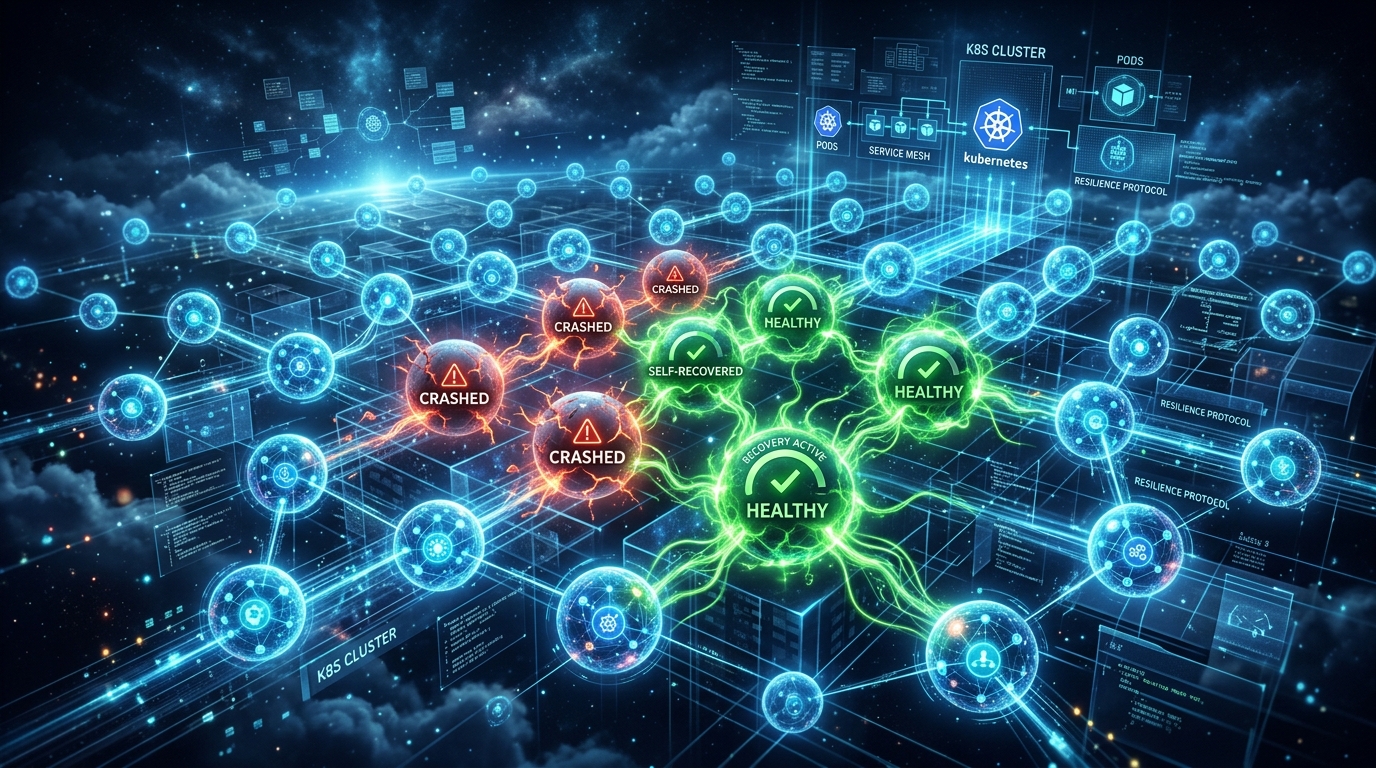
Most AI agent frameworks race to make agents smarter. CNCF just shipped one designed to keep them alive.
At KubeCon + CloudNativeCon Europe in Amsterdam on March 23, the Cloud Native Computing Foundation announced Dapr Agents v1.0 — general availability of a Python framework built on Dapr's distributed application runtime. The goal isn't benchmark-topping intelligence; it's production reliability in the infrastructure layer where agents routinely crash, time out, or lose state.
What v1.0 Delivers
The stable release brings:
- Durable workflows that persist across crashes and resume without data loss
- Automatic retries and failure recovery for long-running agent tasks
- State management across 30+ databases
- Secure multi-agent coordination with SPIFFE identity
- Provider-agnostic LLM switching via YAML config changes
The framework runs natively on Kubernetes, integrating with the cloud infrastructure most enterprises already operate.
The Problem It's Solving
The gap between a working prototype and a production AI agent is wide. Agents fail mid-task, lose conversational context, or get killed by infrastructure timeouts. Dapr Agents treats fault tolerance as a first-class feature rather than an afterthought.
ZEISS Vision Care presented a real-world implementation at KubeCon — using Dapr Agents to extract optical parameters from unstructured documents in a resilient, vendor-neutral architecture.
The project is the result of a year-long collaboration between NVIDIA, the Dapr open source community, and enterprise users. Dapr itself is a CNCF-hosted project alongside Kubernetes, Prometheus, and Envoy.
"Dapr Agents delivers the infrastructure that keeps agents reliable through failures, timeouts and crashes," said Dapr maintainer Mark Fussell. "With v1.0, developers have a foundation they can trust in production."