Ethereum Developers Launch Economic Zone to Unify Fragmented L2 Ecosystem
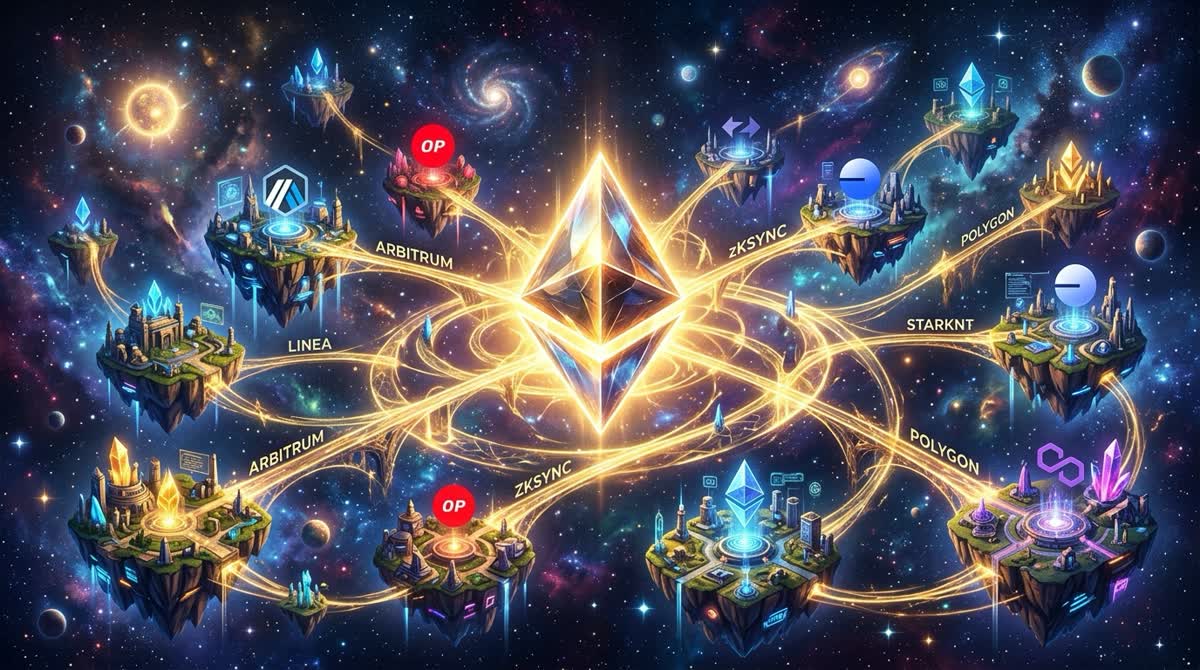
The Fragmentation Problem
Ethereum's Layer 2 ecosystem has grown into a sprawling network of over 20 rollups collectively holding nearly $40 billion in value. But this growth came at a cost: liquidity is siloed, user experience is fractured, and executing transactions across L1 and multiple L2s remains needlessly complex. In February 2026, Vitalik Buterin acknowledged that the original L2 scaling concept had become outdated.
Enter the Ethereum Economic Zone
On March 29, Gnosis and Zisk — with co-financing from the Ethereum Foundation — announced the Ethereum Economic Zone (EEZ), a framework designed to bring synchronous composability to rollups. The core promise: shared liquidity pools and single transactions that span both L1 and L2 chains, with ETH as the default gas token across the entire zone.
The EEZ Alliance
The project launches with the EEZ Alliance, whose founding members include Aave, Titan, Beaver Build, Centrifuge, and xStocks. The Alliance will be registered as a Swiss non-profit, and all software produced under the initiative will be open source.
What Comes Next
Detailed technical specifications are expected in the coming weeks. The EF's involvement extends beyond financing — the Foundation also staked a record 22,517 ETH (approximately $46.2 million) on March 30, signaling renewed commitment to Ethereum's economic infrastructure.
Whether EEZ can actually reunify a deeply fragmented ecosystem remains to be seen, but the combination of EF backing, major DeFi participants, and an open-source mandate makes this one of the most significant Ethereum governance developments in recent months.