Apple Signs Tiny Corp's Driver, Unlocking Nvidia eGPUs on ARM Macs for LLM Inference
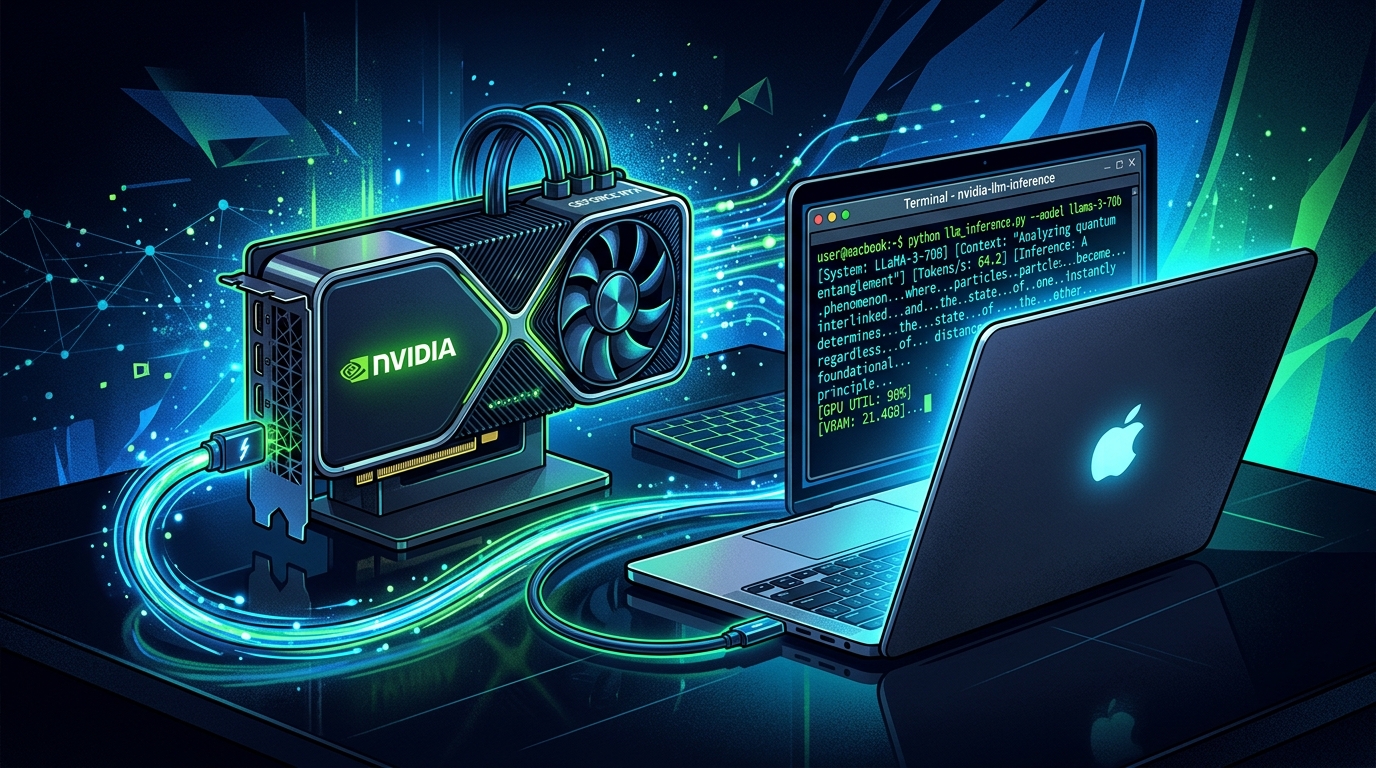
Tiny Corp — the company behind the open-source tinygrad ML framework — announced this week that Apple has officially signed its TinyGPU driver, allowing M-series Mac users to attach external AMD or Nvidia GPUs via Thunderbolt or USB4 for local LLM inference.
What Changed
Previously, running an external GPU on an ARM Mac for compute workloads required disabling Apple's System Integrity Protection (SIP) — a significant security compromise most users were unwilling to accept. Apple's decision to sign the driver removes that requirement. Installation now runs with a single shell command; a system prompt asks users to enable the driver extension in System Settings, and the setup is complete.
What It Supports
TinyGPU requires macOS 12.1 or later, a USB4 or Thunderbolt port, and a supported GPU: AMD RDNA3+ or Nvidia Ampere+. AMD setup is straightforward. Nvidia requires Docker Desktop for a containerized CUDA compiler toolchain — a workaround for macOS's lack of native Nvidia driver support. Once installed, local models run via tinygrad using the DEV=NV or DEV=AMD flag.
Why It Matters
This isn't official Nvidia-on-macOS support — Apple hasn't changed its stance on that front. But it offers a practical path for users who already own high-end Nvidia cards and want to run large models locally without purchasing a dedicated Linux machine. The announcement pulled over 6,600 likes on X, reflecting genuine demand in the local AI community.
The driver supports the same Qwen-class model family that Ethereum co-founder Vitalik Buterin publicly cited this week as his preferred local LLM stack — a coincidence that landed this story in the spotlight at an opportune moment.