Stanford AI Index Shows a Sharp Divide Between AI Experts and the Public
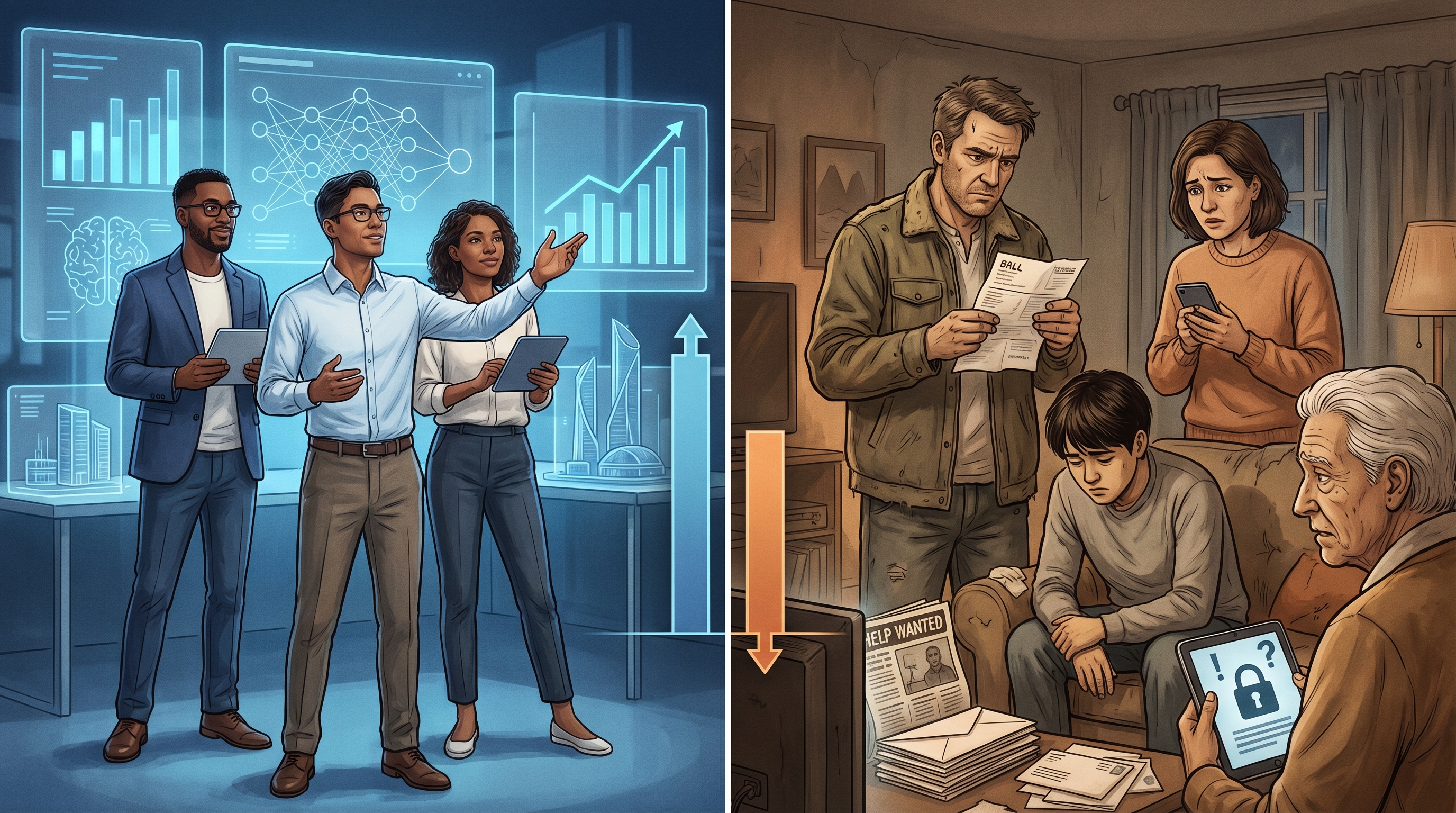
Stanford's 2026 AI Index is putting numbers behind a split that has been easy to feel but harder to quantify: AI experts remain broadly upbeat, while the general public is much more wary about what the technology will do to work, the economy, and daily life.
What the report found
On Stanford's public-opinion page, 73% of experts said AI would have a positive effect on how people do their jobs over the next 20 years, compared with 23% of the public. The gap was similarly wide on the economy, at 69% versus 21%, and on medical care, at 84% versus 44%.
The broader mood is cautious even when attitudes are not uniformly negative. Stanford says the global share of respondents who felt AI products bring more benefits than drawbacks rose to 59% in 2025 from 55% in 2024, but the share saying AI makes them nervous also increased to 52%.
Why it matters
Pew's recent U.S. survey helps explain the tension. It found only 10% of Americans are more excited than concerned about AI's growing role in daily life, while Stanford's roundup notes 56% of AI experts expect AI to have a positive effect on the United States over the next 20 years.
The conservative takeaway is not that the public has turned against AI outright. It is that adoption and trust are moving on different timelines, and the people building AI still appear much more confident than the people expected to live with the consequences.