Canva Pushes AI Assistant Toward Agentic Workflows With Connectors and Scheduling
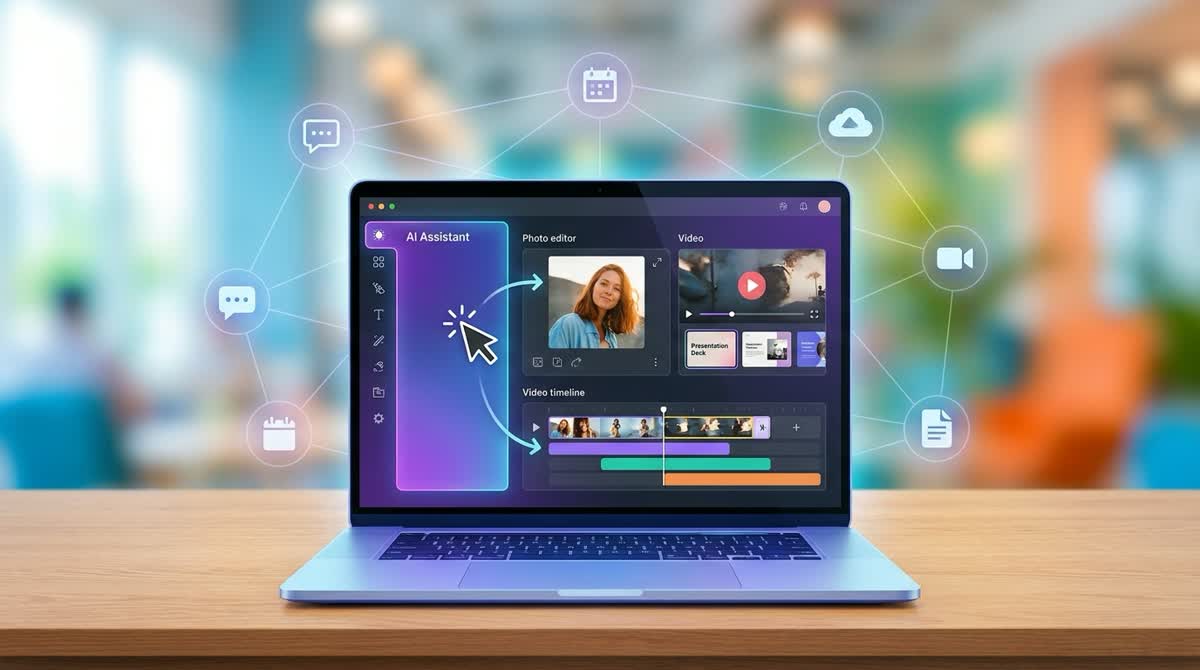
Canva has expanded its AI assistant from a design helper into something closer to a lightweight work agent. Reports from the company's Canva Create event say the new Canva AI 2.0 can interpret a user's goal, call the right Canva tools, and return editable outputs instead of a single static result.
What changed
Across multiple reports, the shared theme is orchestration. Canva's assistant now appears able to generate designs through a conversational interface, connect to workplace apps such as Slack, Zoom, and Google services, run web research, and prepare recurring tasks through a new scheduling layer. TechCrunch and CNET both report that the feature is launching in research preview now, with wider availability expected over the next few weeks.
The conservative read is that Canva is not introducing a general-purpose autonomous agent. It is packaging tool use, context from connected apps, and repeatable task setup inside Canva's own workspace. That keeps the product closer to creative and marketing operations than to open-ended task automation.
Why it matters
The move is notable because design platforms are starting to compete on agent behavior, not just generation quality. Figma has been opening its canvas to external agents, while Adobe and Canva are each trying to make their assistants capable of chaining together actions across larger workflows.
For teams already producing campaigns, decks, and internal content in Canva, the practical change is simple: more of the planning, drafting, and follow-up work can happen in one interface, with humans still reviewing the final output before it ships.