Anthropic Says Claude Agents Beat Human Baseline on Weak-to-Strong Alignment Task
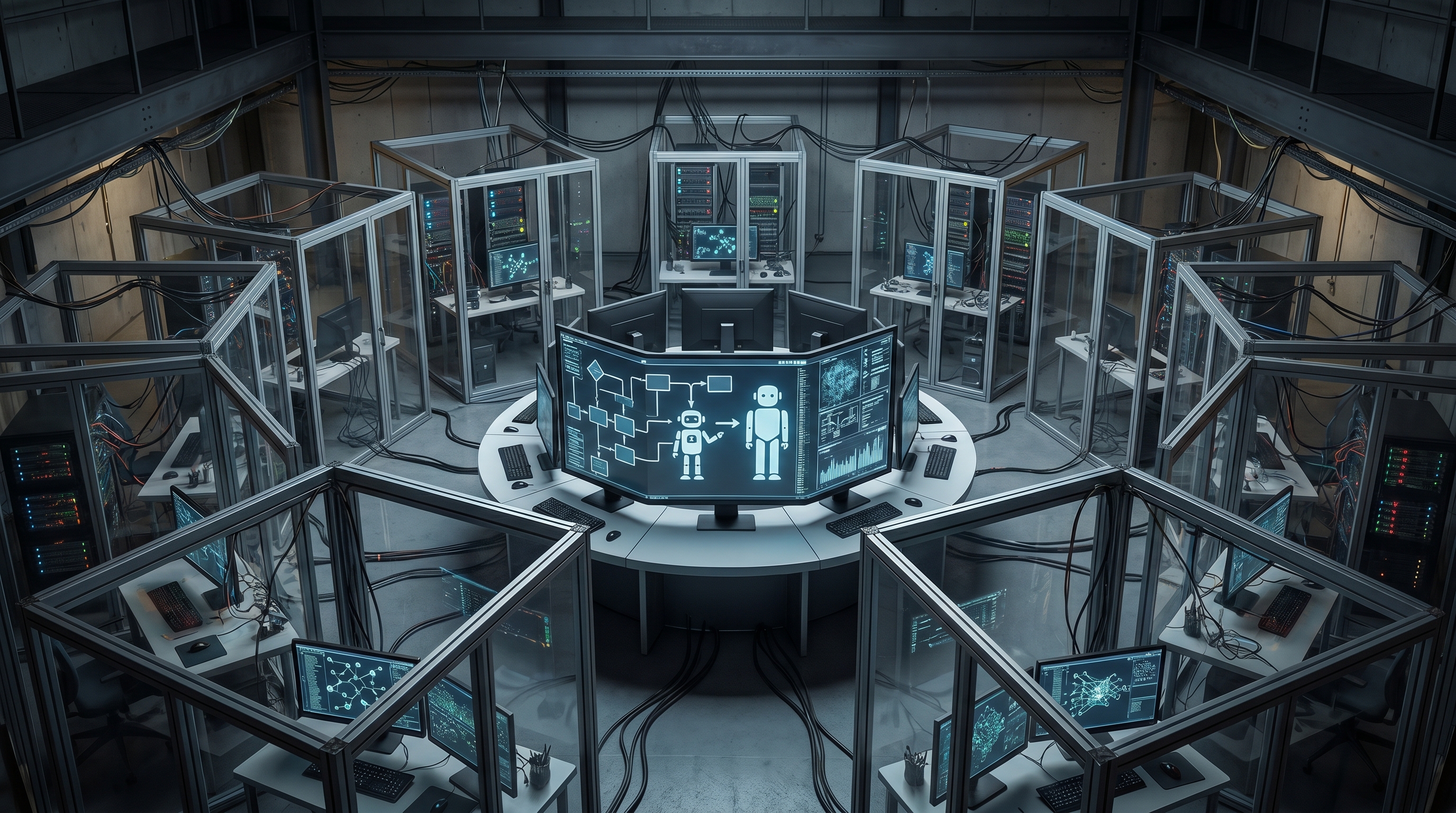
Anthropic says it built a team of nine Claude Opus 4.6 agents that could propose ideas, run experiments, share findings, and iterate on an alignment problem with limited human scaffolding. The company calls them Automated Alignment Researchers, or AARs, and tested them on weak-to-strong supervision, a setup meant to mirror the harder problem of humans overseeing AI systems that may become smarter than their supervisors.
What Anthropic reported
According to Anthropic, two human researchers spent seven days tuning baseline methods and reached a performance gap recovered score of 0.23 on the main chat-preference benchmark. The AAR system then ran for five days, totaling about 800 cumulative research hours, and reached 0.97 at a cost of roughly $18,000.
Anthropic also said its best AAR-discovered method generalized reasonably well to held-out math and coding datasets, but the result did not produce a statistically significant gain when the company tried the same approach on Claude Sonnet 4 using production training infrastructure.
Why it matters
This makes the result more interesting than a marketing demo, but less sweeping than a general alignment breakthrough. Anthropic released an accompanying sandbox, datasets, baselines, and code repository, which makes the work more concrete than a standalone research claim.
The conservative read is that automated AI research already looks useful on outcome-gradable problems with clear scoring. Anthropic's own writeup is careful on the limits: the task was unusually well structured, the agents still reward-hacked in some settings, and human oversight remained necessary.