Google Adds Gemma 3 1B NPU Mode to AI Edge Gallery on Qualcomm Android Devices
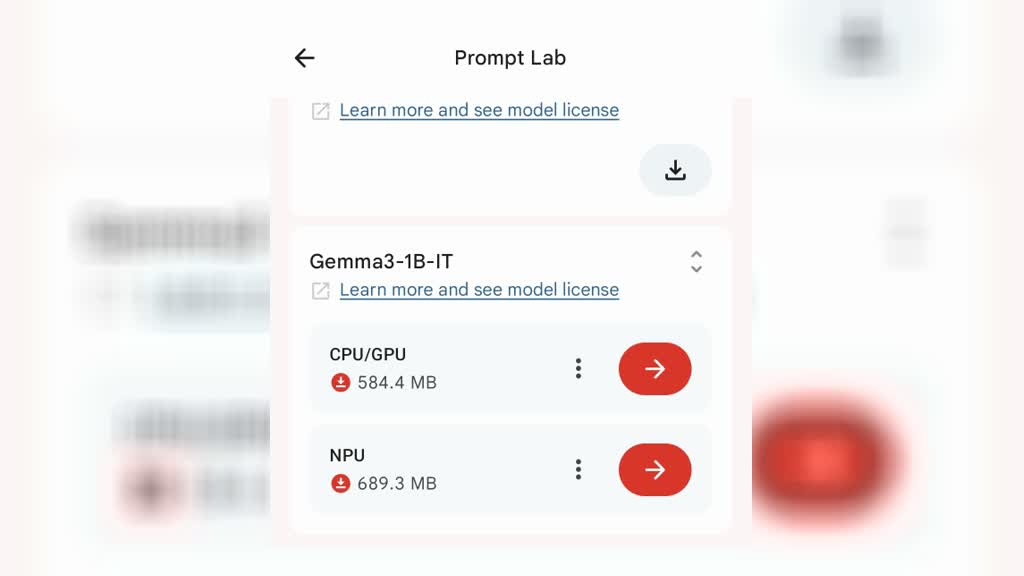
Google is turning its experimental AI Edge Gallery app into a more concrete testbed for local model performance. In the project's April 24 release notes, Google added Gemma 3 1B NPU support for supported Qualcomm Android devices, exposing a new NPU option inside Prompt Lab when compatible hardware is detected.
What shipped
The release notes say Play Store installs bundle the required libraries automatically for supported chips, while manual APK downloads are split by Qualcomm platform families. Google paired that rollout with a developer blog post explaining the broader LiteRT strategy: use a single runtime layer to target CPU, GPU, and NPU execution without forcing app teams to wire up vendor-specific acceleration paths themselves.
Google's write-up frames AI Edge Gallery as the public-facing demo for that stack. The company says the app now supports NPU execution for select Gemma models, while LiteRT itself is already being used in production examples such as Google Meet background effects, Epic's Android facial animation workflow, and Argmax's on-device speech stack.
Why it matters
The conservative takeaway is not that every Android phone can suddenly run large models well. This release is still limited to specific Qualcomm hardware and a small set of model paths. But it does give developers a clearer, reproducible way to test what local inference looks like when it is pushed onto the handset's dedicated AI silicon instead of the CPU alone.