Nvidia Shows Eight Sim-To-Real Robotics Papers At ICRA
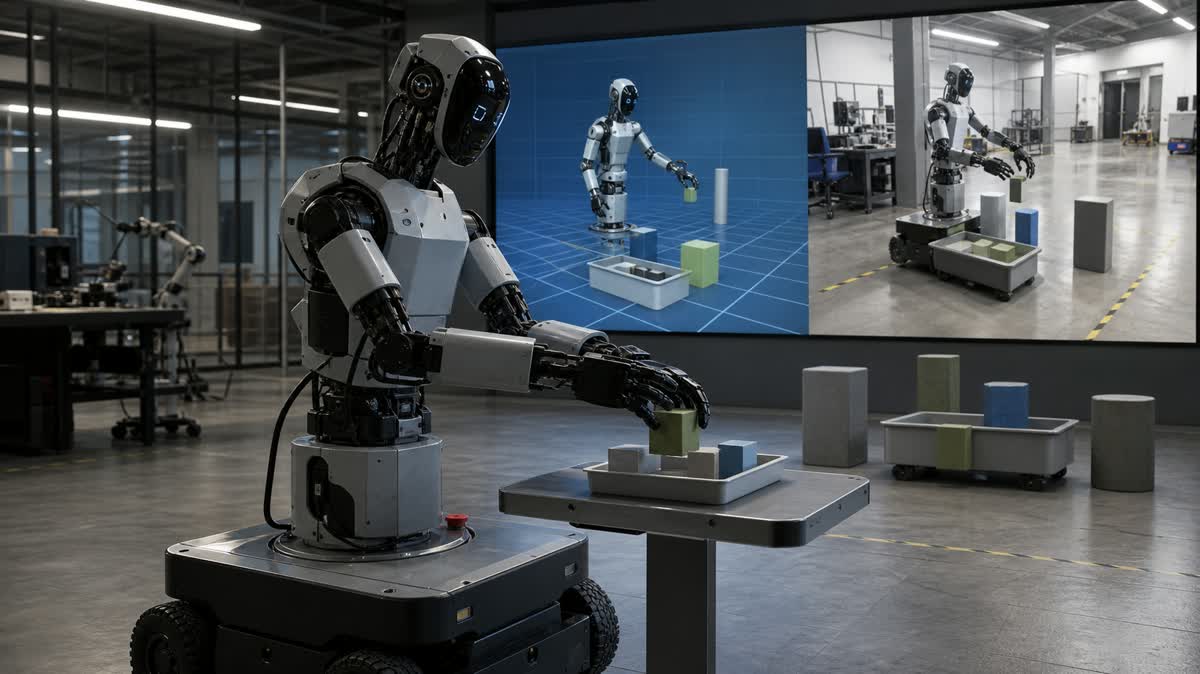
Nvidia is using ICRA 2026 to underline a specific robotics problem: getting policies trained in simulation to work reliably on real machines.
The company said eight new Nvidia Research papers featured around the International Conference on Robotics and Automation focus on that sim-to-real transition. The framing matters because robotics teams increasingly train agents inside synthetic environments, where failures are cheap and data can be generated at scale, before moving those policies into physical systems.
Nvidia's post does not present the work as a finished commercial robot platform. Instead, it points to research across simulation, robot learning, and embodied AI. That includes work from groups such as Nvidia's GEAR lab, whose stated focus is building generally capable agents across virtual and real environments.
The timing is notable because ICRA remains one of the main venues for robotics research, and the 2026 conference is scheduled for June 1-5 in Vienna. By previewing the papers ahead of the event, Nvidia is positioning simulation infrastructure as a central layer in the physical AI stack, alongside chips and robot foundation models.
The conservative read is that this is still research, not deployment proof. But it is a useful signal: the robotics bottleneck Nvidia is emphasizing is no longer just model capability. It is whether simulated training can transfer cleanly enough to reduce the cost and risk of teaching robots in the real world.