OpenRouter Adds Guardrails for Budgets, Models, and Data Retention
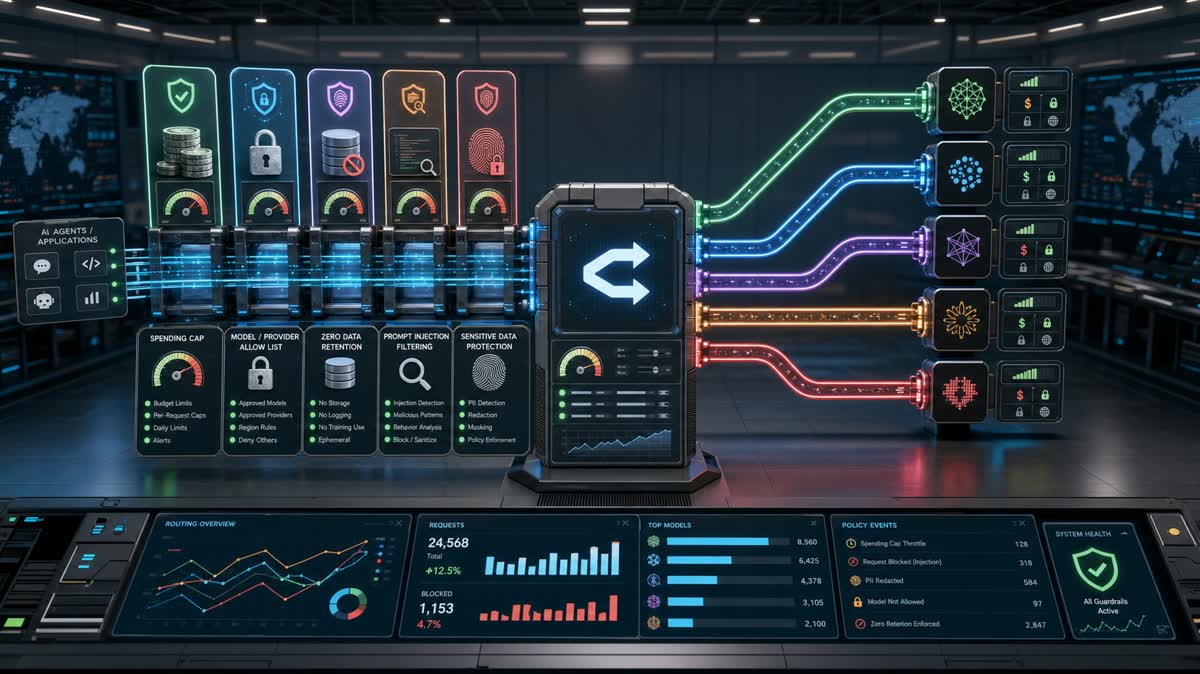
OpenRouter has introduced workspace guardrails for teams using its model-routing layer, adding a governance surface around agent and API usage.
The feature lets organizations combine budget enforcement, zero-data-retention requirements, model and provider restrictions, prompt-injection detection, and data-loss-prevention checks into named guardrails. OpenRouter says the rules can be applied across a workspace, assigned to organization members, or attached directly to API keys. The company is also exposing management API support, so teams can automate guardrail provisioning during onboarding or key rotation.
Budget controls are designed to work at both the member and key level. OpenRouter's docs say limits can reset daily, weekly, or monthly, and requests are rejected once the relevant cap is reached. API-key budgets still apply, with the lower limit winning when multiple controls overlap.
The routing controls are also conservative by design. Model and provider allowlists intersect across applicable guardrails, while zero-data-retention requirements are enforced if any applicable guardrail requires them for a model group. Sensitive-info filters are combined, with blocking taking precedence over redaction when rules conflict.
For agents, the important detail is that these controls sit outside application code. A team can let developers route through many providers while still placing stricter policies on production keys, experimental agents, or customer-facing workflows. The tradeoff is that this remains a platform-specific control layer, not an open standard for agent governance.