NVIDIA Puts Korea Robotics Push In AI Infrastructure Frame
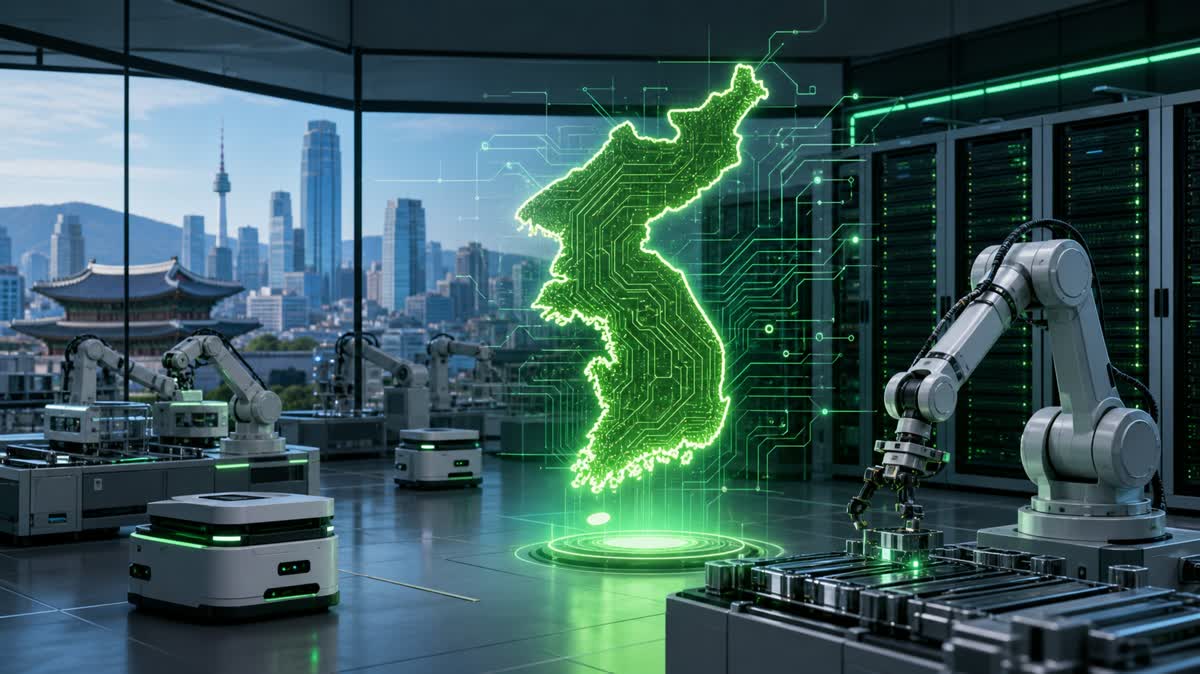
NVIDIA is using Jensen Huang's Seoul visit to frame South Korea as a key market for the next stage of physical AI: robotics, manufacturing systems, and local AI infrastructure.
The company's June 5 blog post says Huang arrived in Seoul after GTC Taipei at COMPUTEX to meet "AI builders, sovereign infrastructure partners and gaming community" members. It describes South Korea as home to sovereign AI infrastructure and robotics innovators, then quotes Huang saying NVIDIA has a "very significant, very large AI infrastructure buildout" underway.
The more specific signal came in Huang's comments to reporters after arriving at Gimpo International Airport. Yonhap reported that he called robotics the next major growth sector for South Korea and said NVIDIA will partner with domestic manufacturing firms in robotics and AI.
That matters because NVIDIA's physical AI strategy depends on more than selling accelerators into cloud data centers. Robotics and smart-factory workloads also pull in simulation, synthetic data, edge inference, and control systems, areas where NVIDIA has been pushing platforms such as Omniverse, Isaac, and Cosmos.
The conservative takeaway is not that any single Korean robotics deal was announced in this visit. The verified news is narrower: NVIDIA's CEO publicly tied South Korea's manufacturing base to the company's AI infrastructure roadmap, and local reporting confirms he named robotics as a major domestic growth area.
For developers and robotics teams, the practical implication is that Korea is becoming another test market for the stack NVIDIA calls physical AI, where model training, simulation, and deployed machines are treated as one infrastructure problem.