Decart Opens Oasis 3 World Model for Driving Simulation
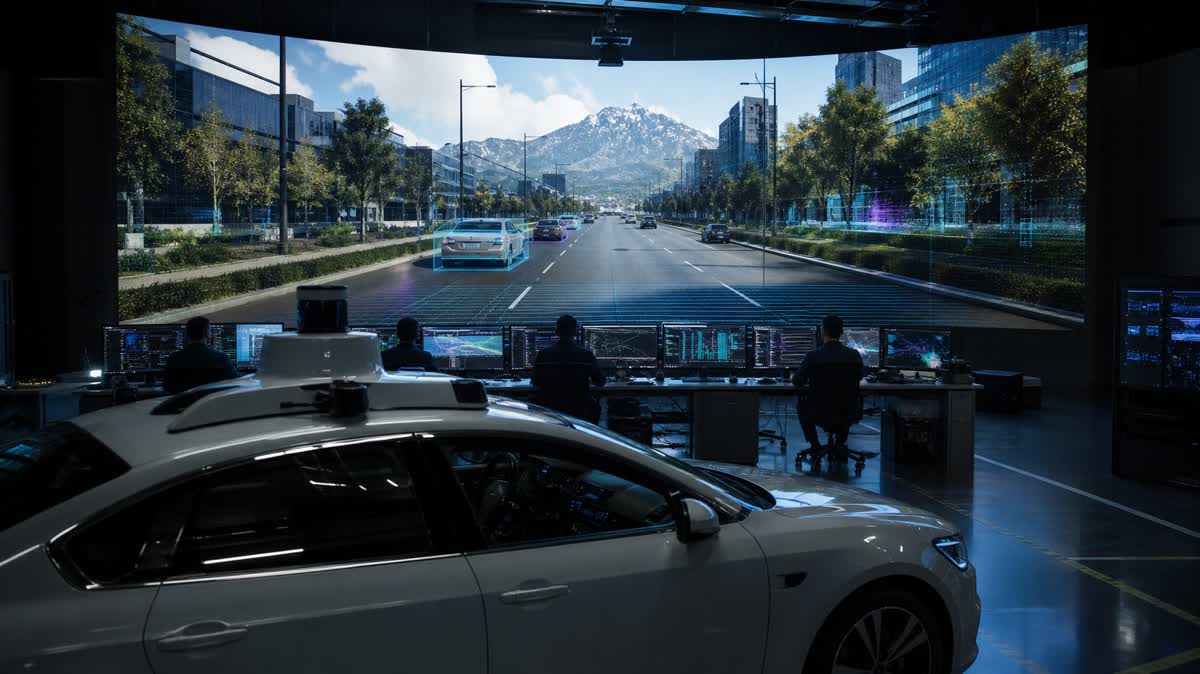
Decart has launched Oasis 3, a real-time world model aimed at generating realistic, controllable driving environments for autonomous vehicle testing.
The company positions Oasis as part of its broader work on interactive world models for physical AI. Decart's own Oasis page describes the system as producing realistic and controllable environments, while its homepage frames the model line as relevant to robotics, autonomous vehicles, manufacturing, and drones.
TechCrunch reports that Oasis 3 is now being made available through an API for developers, with the model generating photorealistic driving scenes that can run for extended simulations. The useful point is not that synthetic driving data is new, but that real-time generation could give teams a more flexible way to test edge cases, environment changes, and long driving sequences without rebuilding every scene by hand.
There are still important caveats. Generated worlds need validation against real sensor data, and simulation quality matters most in rare or safety-critical cases where small artifacts can mislead downstream systems. The model should therefore be read as an additional testing layer, not a replacement for road data or closed-course validation.
For AI infrastructure, Oasis 3 is another sign that world models are moving from research demos toward developer-facing services. If the API proves reliable, teams building robotics and autonomous systems may treat generated physical environments more like programmable infrastructure than static datasets.