Virtuals Shows Eastworlds Unitree G1 Bottle Pickup Demo
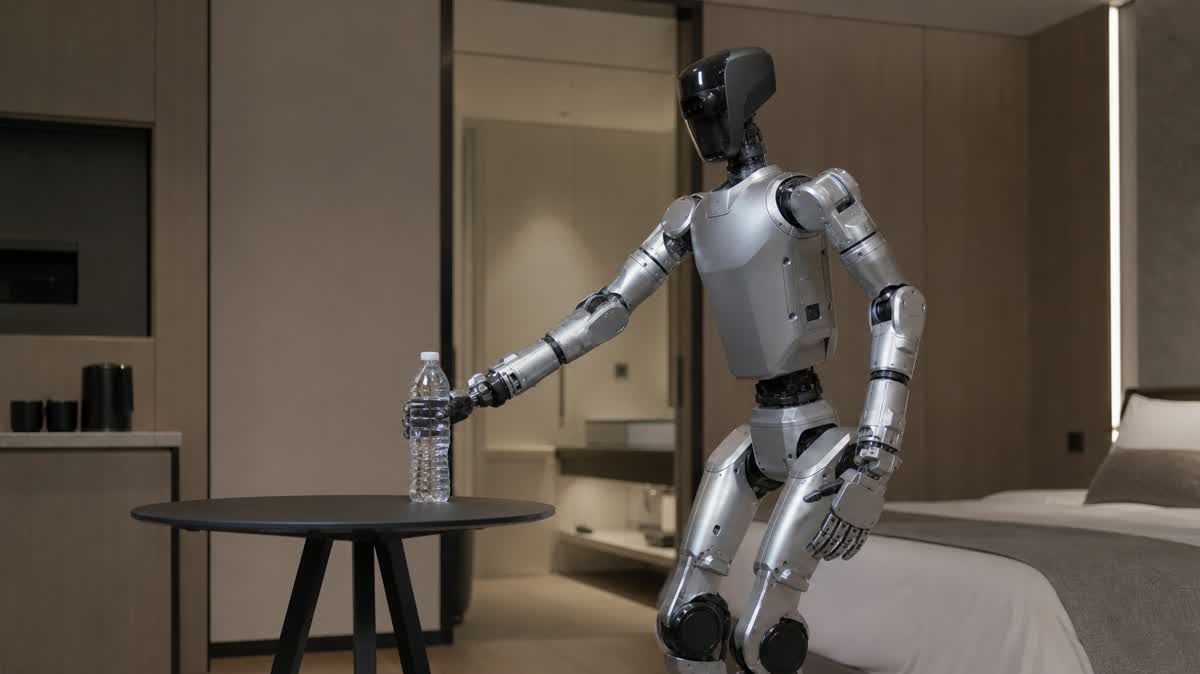
Virtuals says its Eastworlds robotics effort has demonstrated a Unitree G1 humanoid reliably picking up a bottle autonomously, with the model trained using about $200 of compute.
The update is narrow but worth separating from broader humanoid claims. Eastworlds was already running a hotel pilot focused on teleoperation and real-world data collection. This new demo shifts the emphasis to a specific autonomous manipulation task: identifying, reaching for, grasping, and lifting a bottle with a commercial humanoid platform.
That does not prove the system can handle general housekeeping or operate without human support in a live workplace. Bottle pickup is a constrained task, and the public evidence is a short demo rather than a benchmark, dataset release, or reproducibility package. The conservative reading is that Eastworlds is showing a training loop that can move one repeated task from teleoperated data toward autonomy.
The compute claim is the most interesting part if it holds up over more tasks. Humanoid robotics usually struggles less with isolated demos than with reliability, recovery, and data costs across thousands of messy edge cases. A low-cost training run on a Unitree G1 would suggest that useful manipulation behaviors may be reachable without the budgets associated with larger robotics labs.
For Virtuals, the story is also about its agent ecosystem moving into physical-world workflows. The next proof point will be whether Eastworlds can repeat this progression across more hotel-relevant tasks, with clear measures of success and failure rather than single-clip demonstrations.