Google ADK Go 2.0 Adds Graph Workflows for Agents
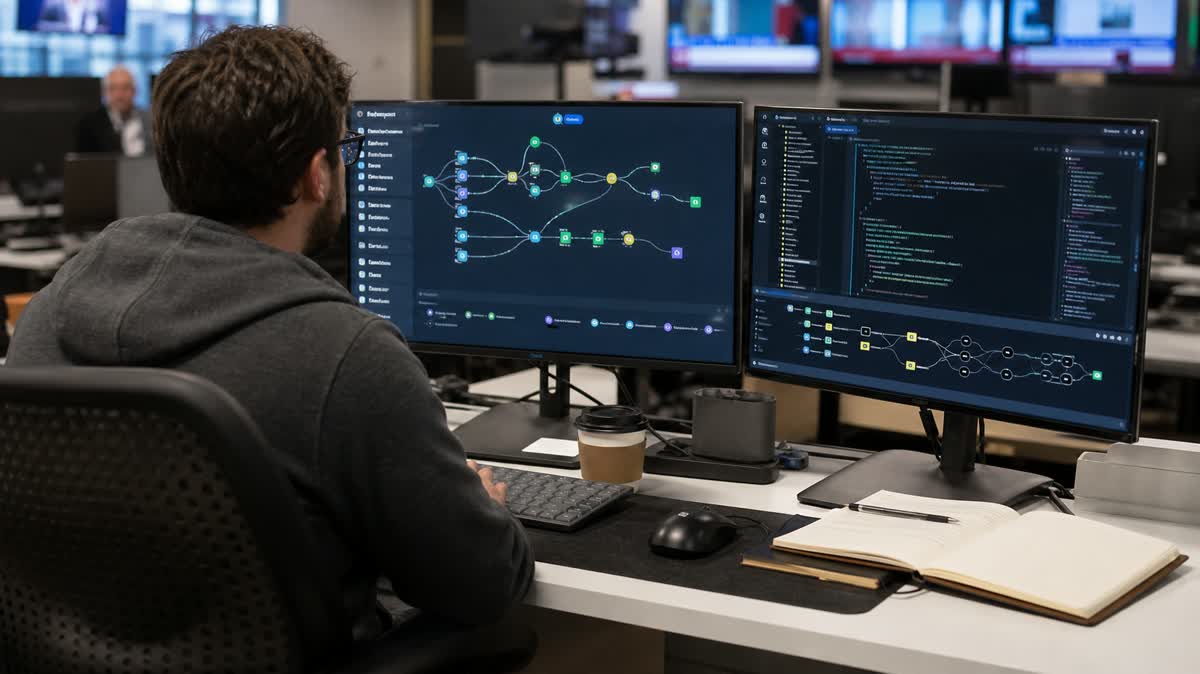
Google has released ADK for Go 2.0, a new major version of its open-source toolkit for building AI agents in Go. The update centers on a first-class graph workflow engine, moving orchestration beyond single-agent loops and ad hoc control flow.
The graph model is aimed at production agent systems that need to branch, fan out work, loop, retry, and coordinate more than one agent. Google says the new runtime lets developers express those paths as nodes and edges while using the same execution model for both simple agents and larger multi-agent graphs.
The release also adds built-in human-in-the-loop support. Any node can pause execution and request approval, correction, or added input from a person, with the workflow waiting durably for the answer. That matters for agent deployments where a model may draft an action but a human still needs to authorize it before the system continues.
ADK Go 2.0 also introduces dynamic nodes, which let developers use regular Go code to decide what should run next at runtime. Google frames this as a way to handle workflows where execution depends on data, loop counts, or a model's previous response.
The release is notable because agent frameworks are increasingly shifting from chat-style demos toward workflow infrastructure: retries, approvals, routing, and coordination. For Go teams, ADK Go 2.0 puts those concerns closer to the language's existing application patterns.