NVIDIA Frames Cosmos 3 as Open World Model for Physical AI
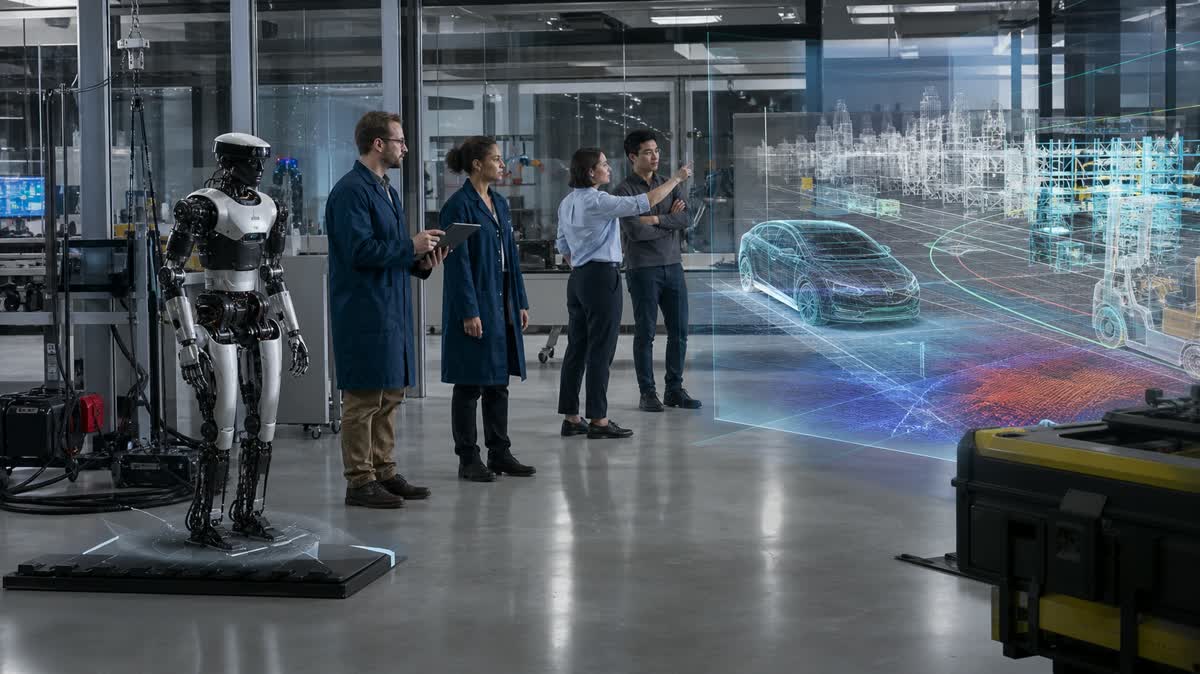
NVIDIA is positioning open world models as a core building block for physical AI systems, with Cosmos 3 as the latest example of how the company wants robotics and autonomous-vehicle teams to train and test before deployment.
In a new NVIDIA Blog post, the company argues that physical AI needs models that can predict consequences, not just recognize appearances. World models are described as systems that learn how environments behave, generate physically grounded world and action data, simulate future states, and give teams a base they can adapt for robots, autonomous vehicles, or vision AI.
The most concrete product claim is Cosmos 3. NVIDIA describes it as an open physical AI foundation omni-model built on a mixture-of-transformers architecture. According to the company, the model family combines vision reasoning, world generation, and action prediction, so developers can use it as a vision language model, a physics-grounded simulator for future states and synthetic data, or a backbone for world action models.
The post also ties Cosmos 3 to NVIDIA Omniverse libraries and OpenUSD workflows. Omniverse libraries are presented as tools for creating simulation-ready environments, while OpenUSD provides a framework for composing and exchanging complex 3D data across digital twins, simulations, and synthetic-data pipelines.
The important signal is not just another model launch. NVIDIA is describing a more integrated stack for physical AI: open model families, simulation environments, data generation, and validation workflows meant to reduce the gap between lab training and real-world deployment.