Northrop Robot Servicer Targets Aging Satellites
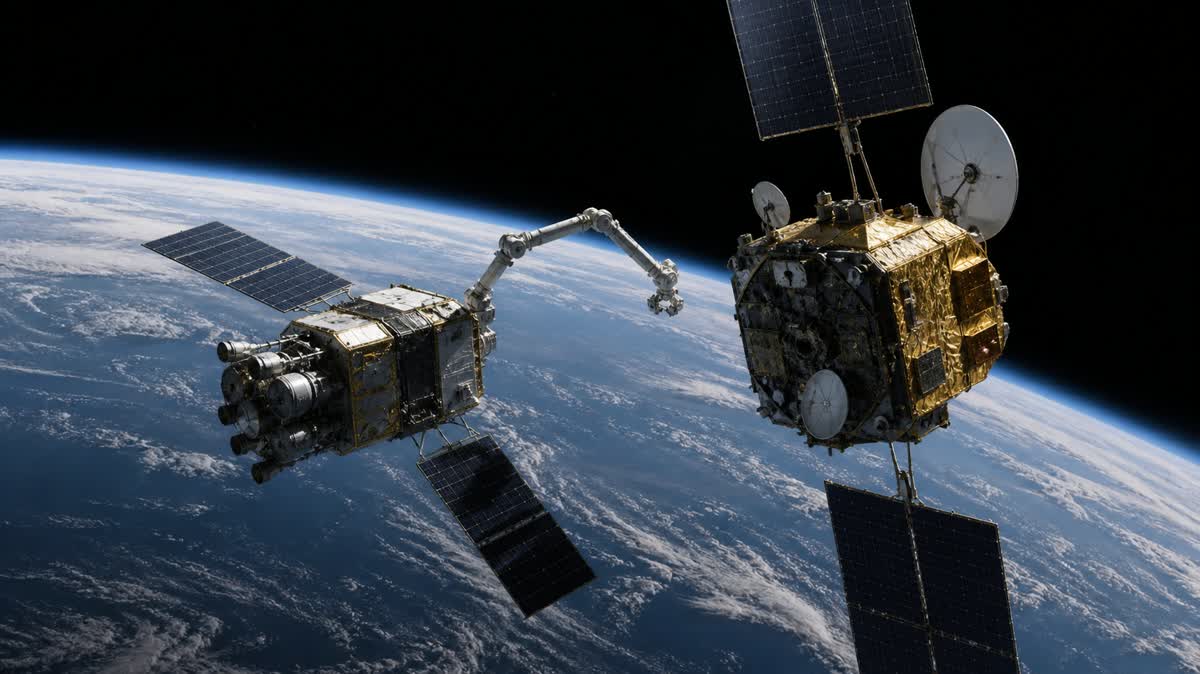
Northrop Grumman's SpaceLogistics unit is pushing satellite life-extension work beyond simple docking vehicles and toward robotic servicing in geostationary orbit. The company's Mission Robotic Vehicle, or MRV, is designed to attach Mission Extension Pods to aging spacecraft, giving operators another way to keep satellites in service without launching full replacements.
The approach matters because many large communications and government satellites remain useful after their propulsion margins or station-keeping fuel become the limiting factor. A small propulsion pod installed in orbit could extend useful life while avoiding the cost, schedule risk and orbital traffic created by launching a replacement satellite sooner.
Northrop says the MRV will use advanced robotics to install the pods, and that the same platform is intended to support inspection, relocation, repair and upgrade tasks. Its SpaceLogistics page also describes a Passive Refueling Module, a refueling interface standard approved by the U.S. Space Force, as part of the broader servicing architecture.
The program builds on Northrop's earlier Mission Extension Vehicle work. MEV-1 docked with Intelsat IS-901 in 2020, while MEV-2 later docked with another Intelsat satellite. The MRV shifts from whole-vehicle docking toward robotic manipulation, making it a test of whether commercial satellite servicing can become a repeatable infrastructure service rather than a one-off rescue mission.