NVIDIA Says Vera Rubin NVL72 Cuts Agent Token Costs
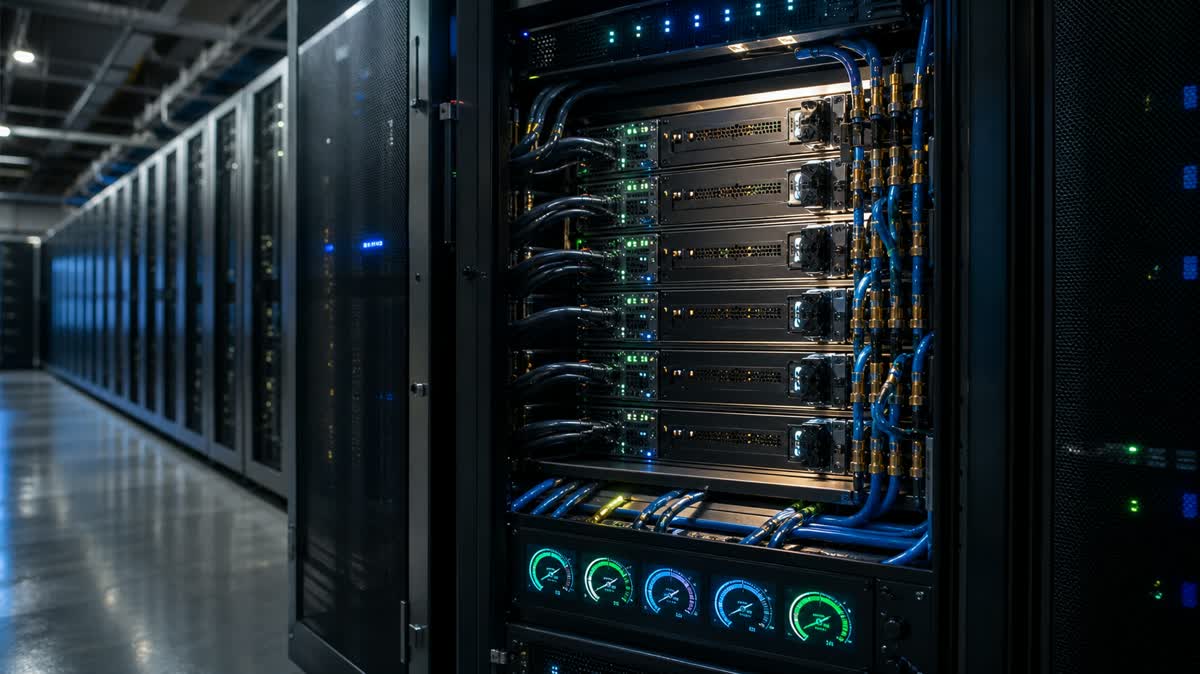
NVIDIA has published early performance data for Vera Rubin NVL72, framing the next-generation rack system around the economics of long-running AI agents rather than raw accelerator speed alone.
The company says its measurements show up to 30x higher throughput per megawatt than GB300 NVL72 on agentic workloads, plus up to 35x lower cost per million tokens. NVIDIA said the data came from the SemiAnalysis AgentX workload, which uses recorded agentic coding sessions with context growth, tool calls and sub-agent spawning preserved.
The claim is narrower than a general benchmark. NVIDIA describes the results as early, measured by the company and pending SemiAnalysis review. It also says the current numbers do not yet reflect Vera CPU performance for tool calling, so the safest read is that this is a preview of the platform's intended efficiency profile rather than a buyer-ready independent benchmark.
The architecture pitch is still useful. Vera Rubin NVL72 extends the rack-scale approach used in Grace Blackwell systems, pairing Rubin GPUs with high-bandwidth NVLink fabric and other data-center components meant to keep prefill, decoding, memory movement and networking balanced for agent workloads.
That matters because agent systems can be power-bound before they are model-bound. If coding agents, browser agents and tool-using assistants run continuously, tokens per watt and cost per token become infrastructure constraints, not just cloud pricing details.