Google Highlights Four Patterns From AI Agent Builders
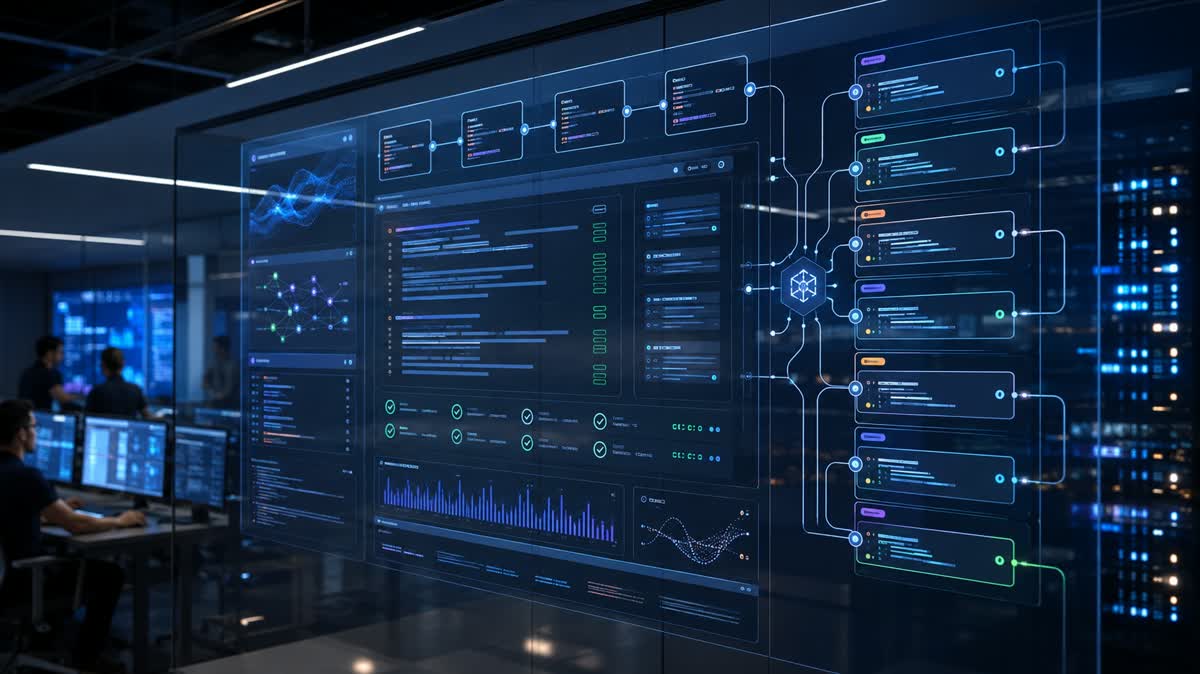
Google Developers published a post distilling four engineering patterns it saw in the strongest submissions to the Google for Startups AI Agents Challenge, shifting the focus from model choice to the surrounding systems that make agentic software reliable.
The company says the challenge drew thousands of builders and that entries were scored across three tracks. In its review, Google highlighted bidirectional MCP for inter-agent communication, asynchronous event buses for parallel work, unified validation for model fallbacks, and tiered routing to control inference cost.
What changed
The post is useful because it treats multi-agent architecture as ordinary software engineering rather than a demo category. Google describes one pattern as letting agents expose capabilities to each other through MCP so separate services can coordinate without brittle one-way handoffs. Another pattern pushes different agents to react to the same event in parallel, which can reduce latency compared with linear pipelines.
Google also calls out validation as a requirement when fallback models are used. In the example it gives, responses from different Gemini models are checked against the same output contract instead of assuming the cheaper or faster model is acceptable.
For developers building agents on cloud infrastructure, the notable message is conservative: routing, validation, and event design matter as much as the headline model. Google’s linked Agents CLI repository adds a practical entry point for teams trying to create, evaluate, and deploy AI agents on Google Cloud.