NHTSA Opens Tesla Cybercab Certification Audit
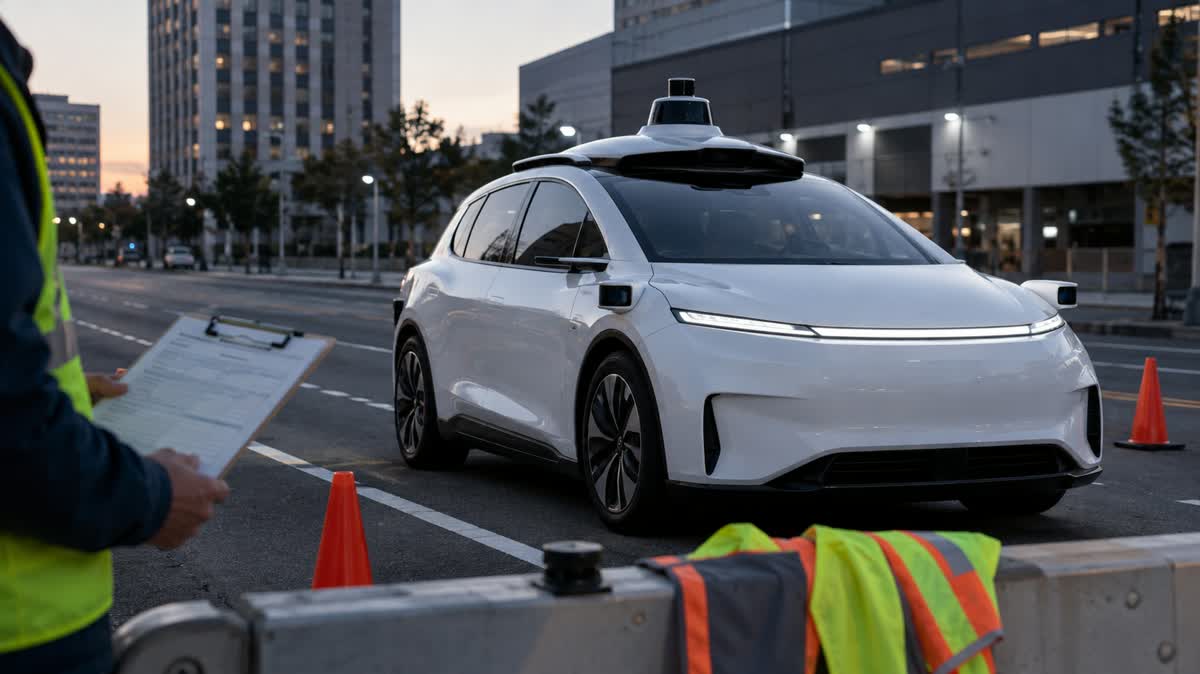
The National Highway Traffic Safety Administration has opened an audit query into Tesla's Cybercab, focusing on how the company certified the driverless vehicle under federal safety standards.
NHTSA's public safety-issues API lists the matter as AQ26002, "Tesla Cybercab FMVSS Certification," opened on September 3. The agency says Tesla began commercial deployment with a small number of Cybercab vehicles in Austin, Texas, and told regulators it had certified those vehicles as compliant with all applicable Federal Motor Vehicle Safety Standards.
The unusual part is the vehicle design. According to NHTSA's summary, the Cybercab lacks permanently attached conventional manual controls, including a brake pedal, gas pedal, steering wheel, and mirrors. The agency says it will examine the process and technical data Tesla relied on when making its certification, including whether Tesla determined that some standards were not applicable to the Cybercab.
The audit does not itself announce a recall or enforcement action. It does, however, place Tesla's self-certification process under direct review just as the company is trying to expand commercial robotaxi deployment beyond a small initial fleet.
For autonomous vehicle developers, the case is a concrete test of how far current U.S. safety rules can stretch around vehicles designed without human driving controls. It also echoes earlier regulatory scrutiny of purpose-built robotaxis that tried to operate without traditional steering and pedal hardware.