Anthropic draft would require court action to halt high-risk AI models
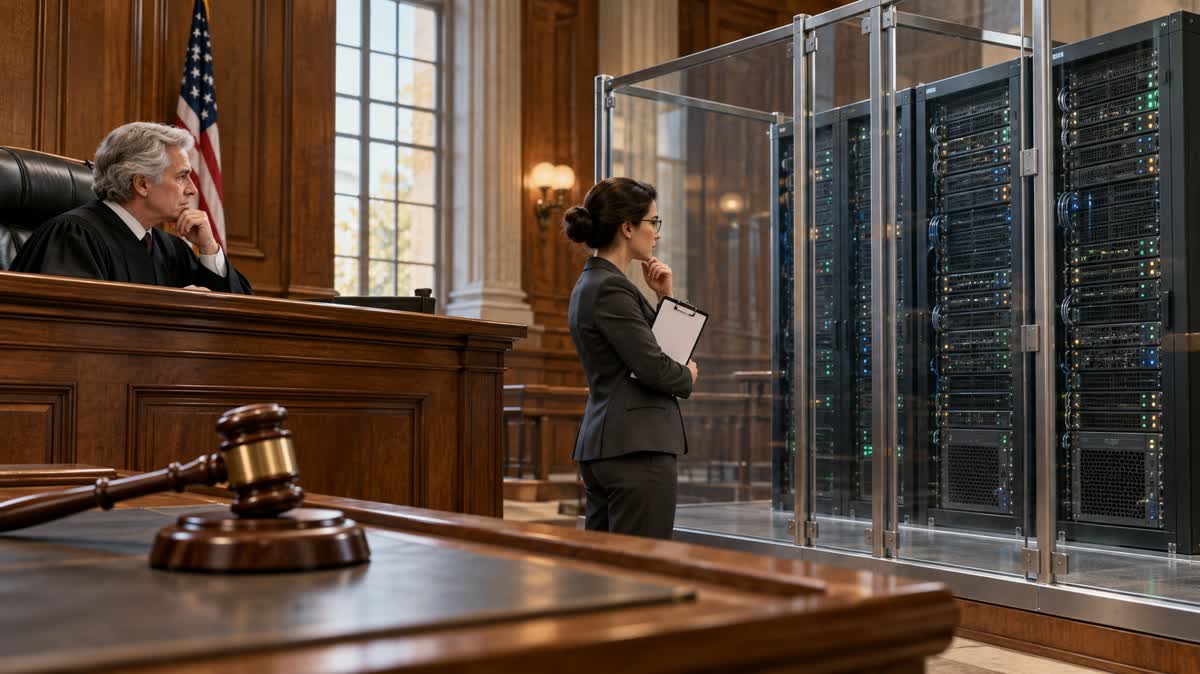
Anthropic is circulating a draft federal AI-safety bill that would require court involvement to halt a model's distribution over imminent catastrophic risks, according to TechCrunch's October 20 account of Politico's reporting. The proposal is a company-backed draft, not an enacted requirement.
Under the reported text, independent evaluators registered with the Commerce Department would assess models. If they identified a foreseeable, imminent catastrophic risk, they would have 72 hours to notify the department, which would then need to ask a Washington, D.C., judge to stop distribution. Federal agencies would not have unilateral authority to impose that halt.
The reported threshold involves more than 50 potential deaths or more than $1 billion in property damage arising from biological weapons, a model escaping developer controls, or a cyberattack. Evaluators could be paid by AI companies, provided payment did not depend on their findings.
What the published framework confirms
Anthropic's June Advanced AI Framework separately proposes independent evaluations, public risk reports at least every six months, and evaluator access to unredacted reports and capable models. It defines evaluator independence around financial interests and major conflicts of interest.
That document presents court enforcement as one possible safeguard against regulatory overreach. It does not name Commerce, specify the reported 72-hour deadline, or itself supply numerical casualty thresholds. Those details therefore remain attributed to reporting on the later draft.
The distinction matters for developers: the proposal concerns how high-risk model deployment could be evaluated and restricted, but neither the published framework nor circulation of a draft creates a current compliance obligation.