Google Open-Sources TorchTPU for Native PyTorch on TPUs
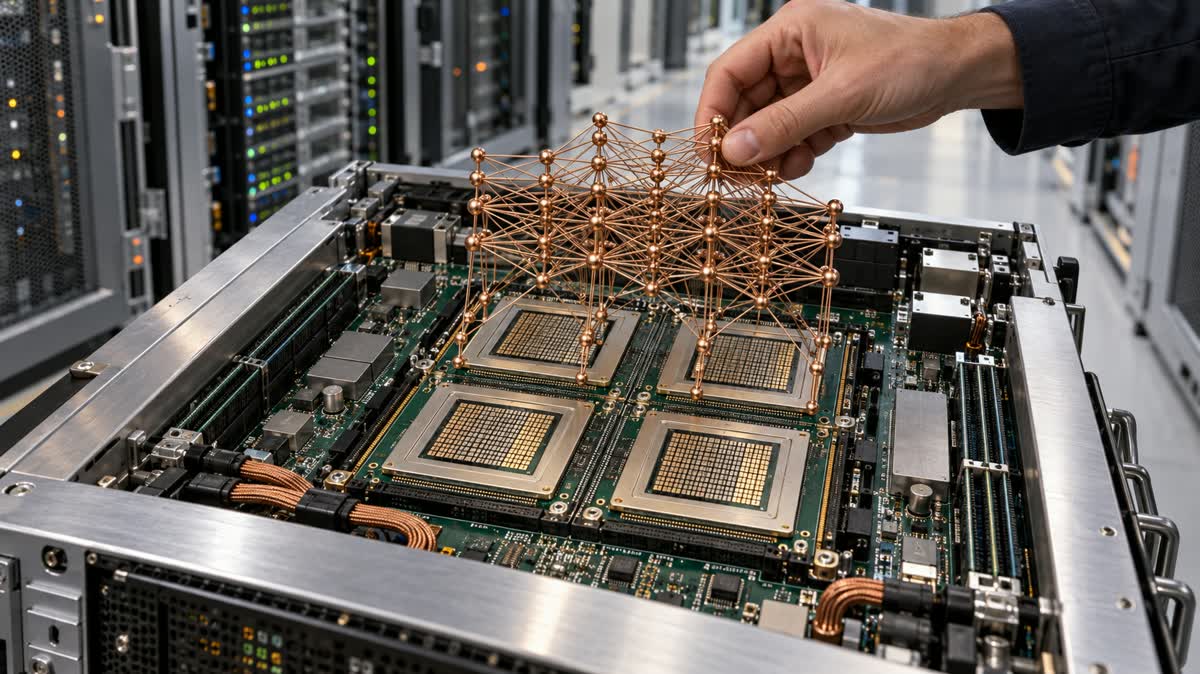
Google announced the open-source release of TorchTPU at PyTorch Conference on October 20, giving developers a native PyTorch backend for its Tensor Processing Units. The release targets training and inference workloads that otherwise require hardware-specific integration work.
Co-developed with Meta's PyTorch team, the stack supports eager execution for debugging and torch.compile for optimized execution. Google describes migration as requiring minimal code changes, rather than guaranteeing that every existing GPU application will run unchanged.
A concrete software release
The public repository documents custom ATen kernels, a compilation cache, distributed training support and examples covering models including Llama, Qwen and ResNet. It lists version 0.2.0 as the public package release, requires Python 3.11 or later, and carries an Apache 2.0 license.
Google also announced TorchTPU integrations for serving engines vLLM and SGLang, plus support across training and orchestration tools. Its Hugging Face collaboration adds TPU execution through familiar Transformers interfaces, while Diffusers support covers eager execution, compilation and tensor parallelism.
Migration assistance remains in preview
A separate TPU agent suite, released in early preview, provides tools for onboarding, profiling, hardware checks and kernel work. Its repository lists Claude Code and Antigravity as supported harnesses; other integrations are described as forthcoming.
For infrastructure teams, the practical change is a public software path for evaluating TPU capacity without abandoning PyTorch workflows. The release does not establish universal performance or cost superiority: model compatibility, custom kernels, capacity and workload-specific benchmarks still determine whether a migration makes sense.