Google’s Suncatcher satellite returns its first AI response from orbit
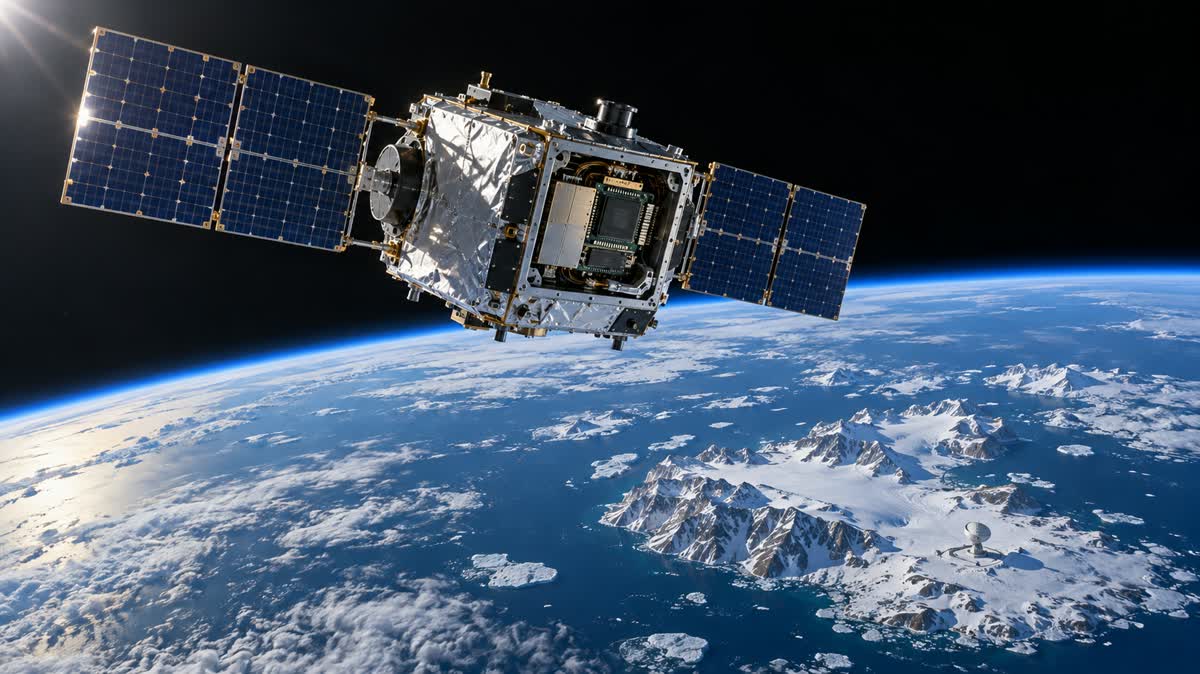
Google’s Project Suncatcher prototype satellite has generated and transmitted its first AI response from orbit, the company announced on October 30. The demonstration used an onboard Gemma 4 open model running on a Tensor Processing Unit, or TPU.
Engineers sent a prompt asking for a haiku about being in space during a ground-station pass. The satellite returned the poem as it passed Svalbard, Norway. Google subsequently tested space-themed limericks and telemetry prompts reporting the technical status of the payload systems.
The spacecraft launched on October 1. Before the demonstration, engineers spent several weeks commissioning it, powering up the host and TPU trays and conducting early machine-learning tests.
Reliability comes next
The result establishes that the prototype can execute an AI workload in orbit and return its output to Earth. It does not establish that a commercial space-based data center is ready to operate at scale.
Google says the next tests will examine TPU performance under thermal stress and radiation exposure. Those results are intended to support a further milestone: two interconnected satellites in 2027.
The broader Suncatcher research program proposes solar-powered satellites connected through optical links, allowing machine-learning workloads to span multiple spacecraft. Google’s published system-design research identifies thermal management, high-bandwidth ground communications and on-orbit reliability as unresolved engineering challenges.
For AI infrastructure, the important development is the move from ground-based testing to an operating orbital payload. Whether that approach can support sustained, distributed computation remains a question for subsequent hardware and communications trials.