Google and Speakeasy Open-Source SDK Generation Suite
Speakeasy opens its seven-language SDK generator and agent tooling with Google, while repository terms distinguish AGPL and commercial output licensing.
web3 and ai trends / open source /

Speakeasy opens its seven-language SDK generator and agent tooling with Google, while repository terms distinguish AGPL and commercial output licensing.
Ethereum developers agreed to an October 6 Sepolia upgrade while warning that disposable builder identities could disrupt testing; Hoodi remains tentative and mainnet is unscheduled.

Google's private-preview service analyzes agent session traces asynchronously, with Security Command Center findings and explicit opt-in requirements.

PrismML releases a compressed Qwen3.8-based model for local inference, reporting 98.2% benchmark retention and offering Apache 2.0 weights.
Vercel announced Harbor support for running agent evaluations in isolated Sandbox microVMs, with firewall-enforced network policies and optional credential injection.

Huawei says Ascend 960DT will be available in Q1 2027, alongside a systems roadmap built around optical interconnects and larger AI computing clusters.
Ripple's beta MPP SDK supports one-time XRP and issued-token payments, while repeated off-chain payment sessions remain XRP-only.

Treble's Series A extension backs acoustic simulation and synthetic audio data for voice models, wearables, and physical AI.

Snap's U.S. iOS preview analyzes Gmail and Calendar for personal insights, while the fuller anticipatory AI experience remains invitation-only on Mac.
NVIDIA reports higher Vera Rubin throughput in MLPerf Inference 6.1, while MLCommons confirms preview status and adds RAG and edge-agent tests.

Google Home's early-access MCP server lets authorized AI agents control devices and query household history, but does not yet support creating automations.

Payward plans permissioned Hyperliquid perpetual futures markets for U.S. clients, with Bitnomial clearing and NinjaTrader accounts, subject to regulatory approval.

Circle's Arc is live, combining USDC-denominated transaction fees with a permissioned validator network for payments and tokenized markets.

The Senate failed to advance the CLARITY Act, leaving proposed crypto market-structure rules stalled amid disputes over ethics and regulatory capacity.
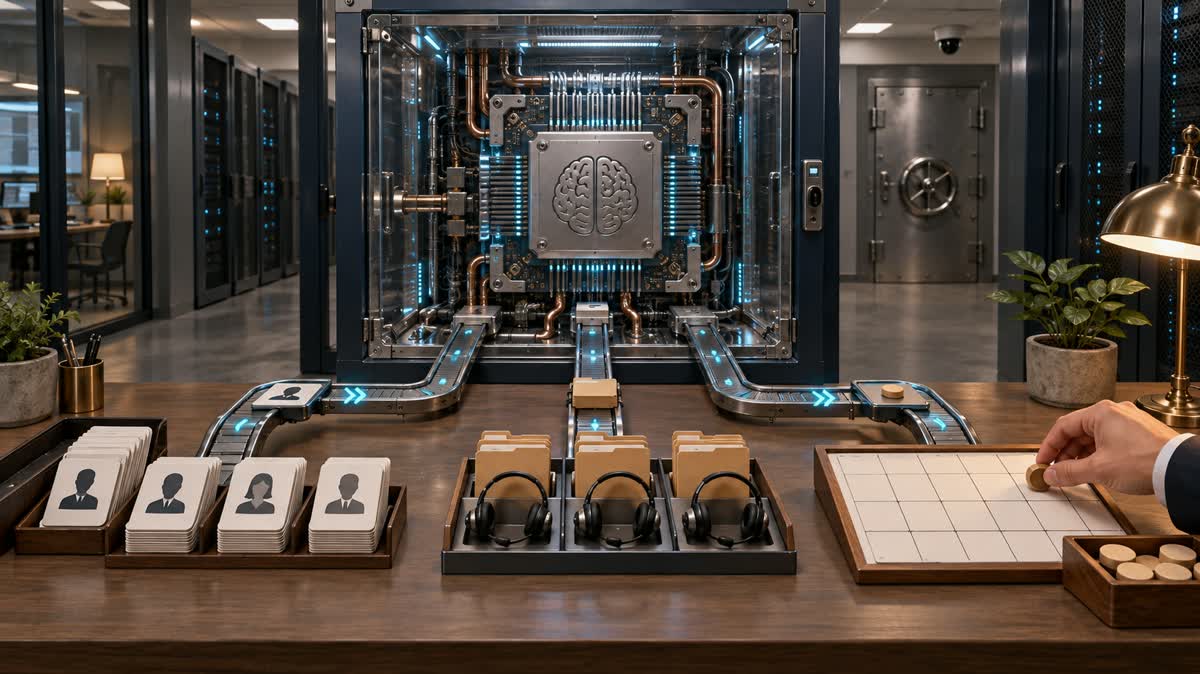
Salesforce's Koa specializes NVIDIA Nemotron 3 Super for CRM workflows, with limited customer pilots and U.S. general availability expected in winter 2026.

Google's open-source refund-agent demo shows how intent checks and session-level monitoring address attacks that single-request guardrails miss.

Two live hotlines offer AI agents ways to report concerns to humans, with explicit limits on privacy and verification.

Symbiosis traced its Bitcoin Bridge exploit to sender-identification and negative-fee bugs, estimating losses at 9.97 BTC and requiring an audit before restart.

Solana's new v1 format expands transaction capacity from 1,232 to 4,096 bytes, while requiring updates for transaction readers, indexers and fee sponsors.

Vercel's AI SDK harness layer can now use supported coding-agent subscriptions, with credential resolution and token refresh handled on the host.

Cornelis announced $205 million in funding and an Active Compute Fabric architecture, with CN6000 sampling ahead of expected Q4 availability.

Microsoft AI proposes explicit stopping conditions and human-readable agent activity in a draft code intended to guide model development from 2027.

Lyft riders in central Nashville can now be matched with Waymo robotaxis, with a shared fleet serving both apps and availability expanding gradually.

A new investigation links May's RubyGems package flooding to suspected OpenAI agents; successful API-key theft remains unproven.

Dario Amodei commits Anthropic to employee-like access for outside safety evaluators, while broader limits on AI development remain proposals requiring coordination.

Mecka AI is reportedly nearing Sequoia-led financing at about a $500 million valuation, with terms still unsettled as investors pursue robot-training data infrastructure.

A letter signed by 25 Fields Medalists warns that rushing AI-generated solutions can undermine attribution, understanding and the training of future mathematicians.

Google describes an open-source agent loop that tunes Gemma models on TPUs, records evaluations and retains improvements in Git.

Attackers used Trezor's newsletter account at Brevo to send wallet-backup phishing emails; Trezor says its wallets and account systems were not breached.

OpenDesign reports an 81.2 score for DeepSeek V4.1 Flash versus GPT-6 Astra's 82.7, at much lower estimated token cost, in a prototype-design evaluation.

Senate Republicans circulated updated CLARITY Act text with CFTC registration requirements for non-decentralized protocols and revised credit-union provisions.

Clearview confirmed an internal AI web-research prototype after WIRED examined its interface code, while saying no law enforcement customer has used it.

Skild reports that S1 performs unseen manipulation tasks from one video without fine-tuning, with internal results that measure step-level rather than whole-task success.

Maven Robotics emerged from stealth with a reported $100 million raise and plans to build 250 third-generation robots for industrial workflows.

Alignment researcher Paul Christiano joins OpenAI's nonprofit board and Safety and Security Committee, calling for stronger oversight and externally verifiable safety results.

Listen Labs reportedly abandoned a $125 million financing at a $1.5 billion valuation as Salesforce explored a roughly $2 billion acquisition; no deal is finalized.

Treasury designated Xinbi Guarantee, SafeW Technology and Anwen Technology in an action targeting a cyber-scam marketplace and its messaging and wallet infrastructure.

StableFund pairs $400 million in sponsor co-investment with USDT settlement infrastructure for asset-backed lending, targeting up to $3 billion in outside institutional capital.

Google's Kotlin agent framework reaches 1.0 with compile-time tools, resumable sessions and Android integrations, while ML Kit tool calling remains unsupported.

Instacart's Clementine turns meal requests and grocery lists into personalized carts for most U.S. and Canadian customers.

Cognition announced a Series E of more than $2 billion at a $48 billion valuation, reporting almost $900 million in run-rate revenue as it expands Devin.

Vercel's new Pro CDN billing tiers absorb temporary traffic spikes, while sustained growth and eligibility restrictions still affect pricing and service.
Mistral says its Samsung-led Series D raised €3 billion at a valuation above €21 billion to expand frontier research, training compute, and international operations.

A Korean budget-office study estimates annual payment-cost savings of ₩370 billion to ₩5.15 trillion under different adoption and fee assumptions, while recommending reserve safeguards.

EIP-8141 developers say transaction expiry, signature aggregation and other features could use programmable frames, reducing repeated transaction-format changes.

Boost Town has launched a paid spotlight for X posts on Robinhood Chain, allocating half of each placement payment to a Stock Token reward pool for readers.

Authors are disputing publisher and agent allocation claims tied to Anthropic's copyright settlement, exposing recordkeeping problems in a large AI training case.

New Jersey asked the U.S. Supreme Court to decide whether prediction-market platforms can offer sports event contracts without following state gambling laws.

Google Pics is rolling out as an AI image creation and editing tool for Google AI Pro and Ultra subscribers and most Workspace business customers.
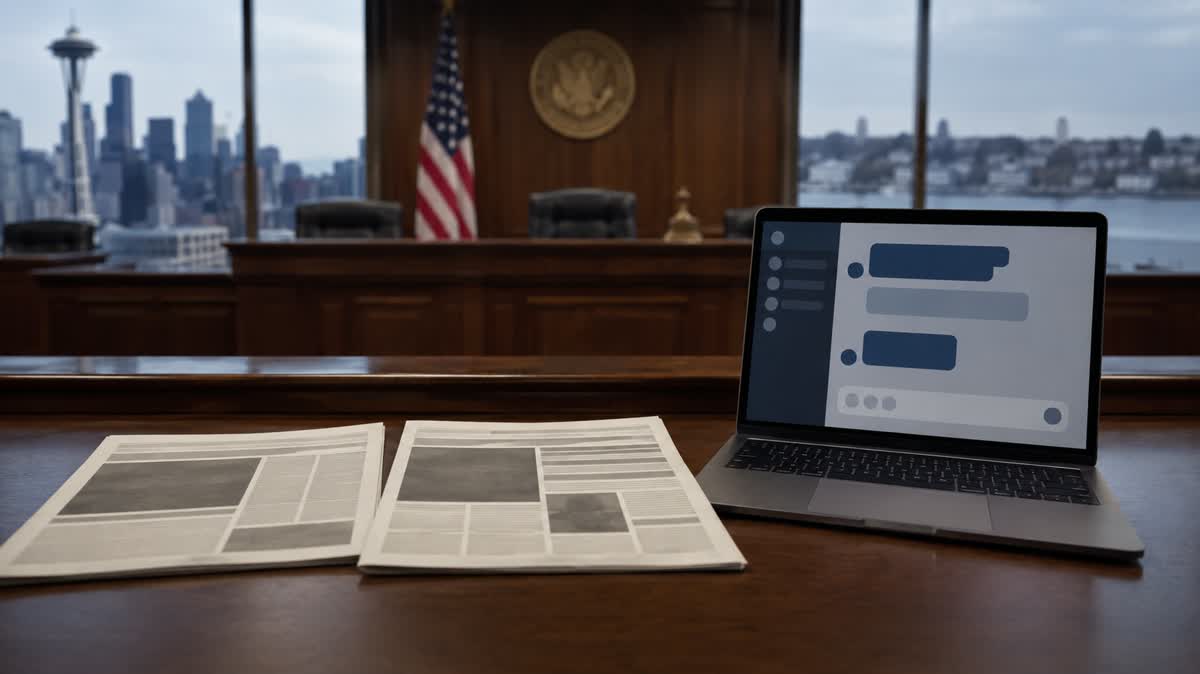
The Seattle Times Company and Newsday filed a federal copyright case against OpenAI and Microsoft over alleged use of their journalism in AI systems.